In an era of unprecedented change across healthcare marketing, point of care (POC) advertising has become a central way brands connect with patients and providers at the moments that matter most.
At its core, POC advertising is about reaching patients and providers where and when decisions are made. Traditionally, it has referred to static collateral (think posters or brochures in waiting rooms or exam areas), but that definition no longer captures the full picture. Today, POC encompasses a broad ecosystem of physical and digital settings where healthcare unfolds, from doctor’s offices and pharmacies to clinical platforms, telehealth environments, electronic health records (EHRs), and even new AI-powered clinical tools. Modern POC blends context, timing, and precision, reshaping the patient journey and redefining what effective patient and provider engagement looks like in 2026.
POC is becoming a substantial part of media plans. The Point of Care Marketing Association (POCMA) reports that its members alone have surpassed $1 billion in revenue through POC advertising. Here are three key facts to keep in mind about POC.
1. POC is embedded in the healthcare journey
POC is a unique healthcare advertising touchpoint because it’s embedded directly into the healthcare experience. Messaging where patients are actively engaging with their clinicians or care decisions aligns with moments of high receptivity, increasing relevance and trust. Being present in these clinical moments helps bridge the gap between awareness and action, guiding patients toward more informed conversations and decisions while enhancing provider confidence in treatment options.
That’s not to say that POC should be the only area of advertising focus within the healthcare journey. Other digital media channels, such as CTV and Display, play a crucial role in increasing awareness and education of treatment options in advance of the in-office discussion, leading to not only more effective patient-provider conversations, but also better health outcomes. According to a recent POCMA study, patients exposed to both digital media and POC ads were 200x more likely to convert compared to seeing just a digital ad alone, underscoring the power of reinforcement at the moment of care.
2. POC is digital-first
One of the most consistent trends in modern point of care marketing is the shift from traditional, static assets to digital-first formats. As media consumption has become predominantly digital, healthcare advertising has followed suit. While in-office print billboards and brochures remain powerful, it’s no surprise to see that they are increasingly supplemented with or replaced by dynamic digital screens, tablet-based engagement tools, mobile messaging, and integrated EHR platforms.
Of course, this transition presents its own challenges, but it offers major benefits, including:
- Contextual relevance. Digital POC tools can tailor messages based on patient conditions, demographics, or even the specific stage of the healthcare journey. This also allows for easier, faster optimization of creative messaging. POC is as close to the bottom of the funnel as possible in healthcare advertising, making it a natural priority for brands already investing across the funnel.
- Omnichannel continuity. Digital POC serves as the connective tissue between pre-visit awareness campaigns and in-visit clinical conversations, reinforcing messages when a patient is most attentive.
- Expanded reach. Digital POC extends beyond the clinic walls to include telehealth, patient portals, pharmacy screens, and follow-up engagement, making it a true 360° touchpoint in the healthcare journey.
3. POC is precise
Perhaps the most transformative development in POC advertising is its increasingly sophisticated measurement and targeting precision. Unlike traditional mass-reach channels, where reach is broad but attribution is weak, digital POC platforms have progressed to engage clinically relevant audiences with highly specific criteria.
This precision is powered by advanced targeting technologies and first-party, HIPAA-compliant data integrations. For example, digital touchpoints embedded in EHRs can trigger brand messages to clinicians in real time, enabling moment-of-decision engagement that is timelier and more relevant than what traditional ads may offer.
New advancements will also allow POC marketers to move beyond measuring simple impressions and media metrics to more meaningful, healthcare-focused outcomes. Standardized health KPIs, including new-to-brand prescriptions (NBRx), script lift, and more, will, as in other digital media channels, continue to be sought by clients and will soon become the standard for POC measurement.
Why This Matters
The evolution of point of care advertising illustrates a broader transformation in healthcare advertising, one driven by the convergence of patient expectations, digital technology, and outcome-oriented marketing. Today’s POC is an interconnected, digital-first, precision channel that delivers messaging in the moments it matters most.
As healthcare journeys become more dynamic and data-driven, brands that embrace POC as a strategic pillar within their omnichannel media strategy will be best positioned to build deeper connections with both providers and consumers. The result: stronger patient engagement, more confident clinical conversations, and better health and business outcomes.
POC Advertising Channels and Placements
Point of care advertising touches a wider range of channels than the term traditionally implied. Waiting room screens and exam room tablets still play a role, but they now sit alongside EHR-based messaging that reaches providers during e-prescribing and clinical review, telehealth platforms that surface education before or during a virtual visit, and pharmacy counter displays that reach patients picking up a prescription. Patient portals and post-visit follow-up tools extend POC into the period right after an appointment, when adherence and refill decisions get made. Because these placements sit inside real clinical and pharmacy workflows rather than beside them, POC advertising reaches patients and providers at moments a standard display or social placement can't replicate. Choosing the right mix depends on where a brand's target audience actually engages during the care journey, not on which formats are easiest to buy.
Activate POC as Part of a Connected Healthcare Campaign With DeepIntent
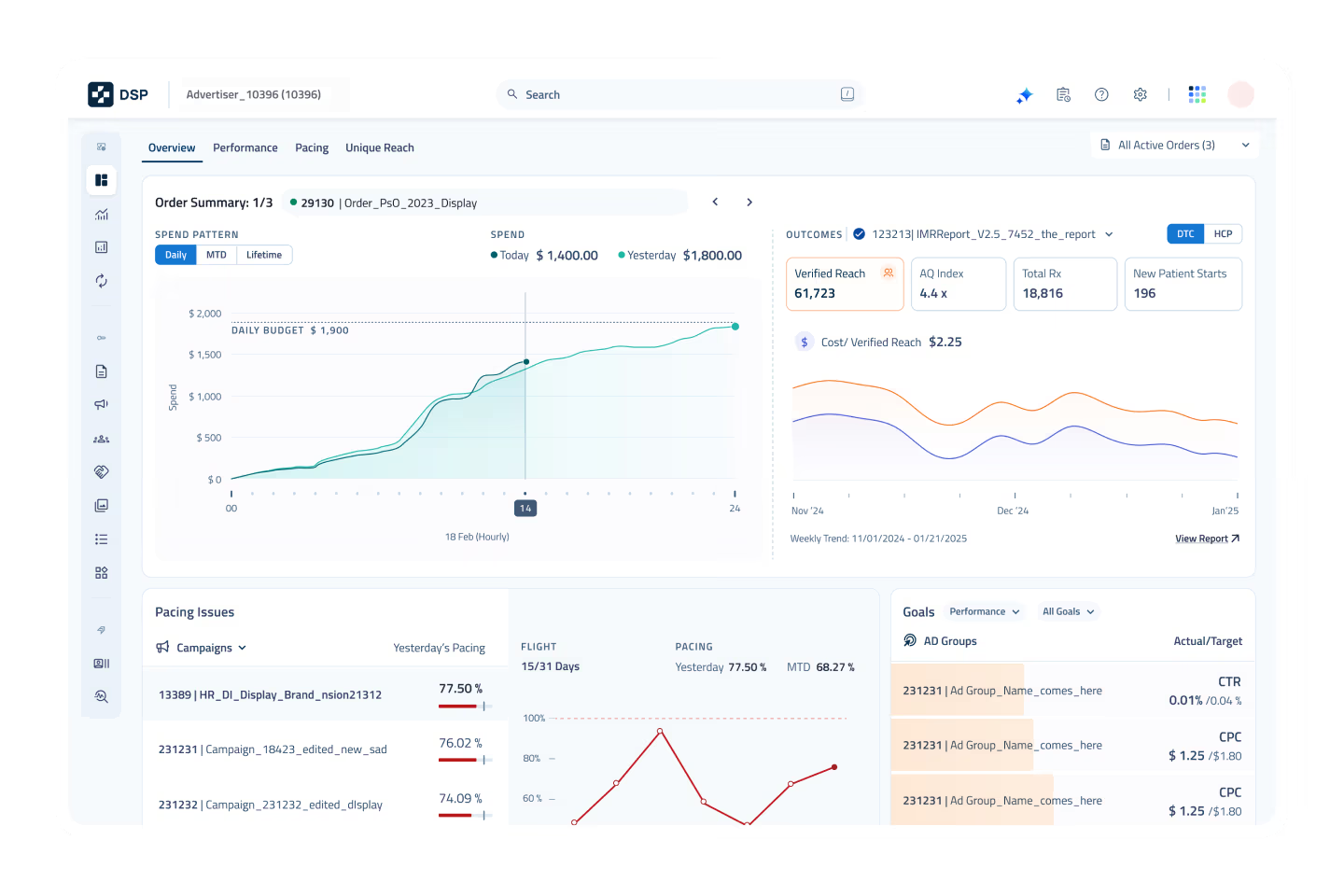
POC advertising performs best when it isn't running in isolation. DeepIntent connects point of care placements with the rest of a brand's media plan, including EHR, CTV, display, and audio, so a provider or patient who sees a message pre-visit encounters a consistent, related message again at the point of care. Shared audience data and identity resolution keep that continuity intact across channels, while provider-level and patient-level reporting show how POC contributes to outcomes like script lift and NBRx alongside the rest of the campaign. If you're ready to bring point of care advertising into a connected strategy, schedule a demo with our team.