.png)
For years, connected TV occupied an awkward middle seat in the media plan: too expensive for niche indications, too imprecise for the HCP and patient audiences rare disease campaigns demand.
But new data from campaigns run on DeepIntent across seven rare disease brands — spanning hematology, metabolic, neurology, and immunology — shows that programmatic CTV isn't just viable for rare and ultra-rare conditions. In many cases, it outperforms expectations by orders of magnitude.
The Numbers That Should Change Your Planning Conversations
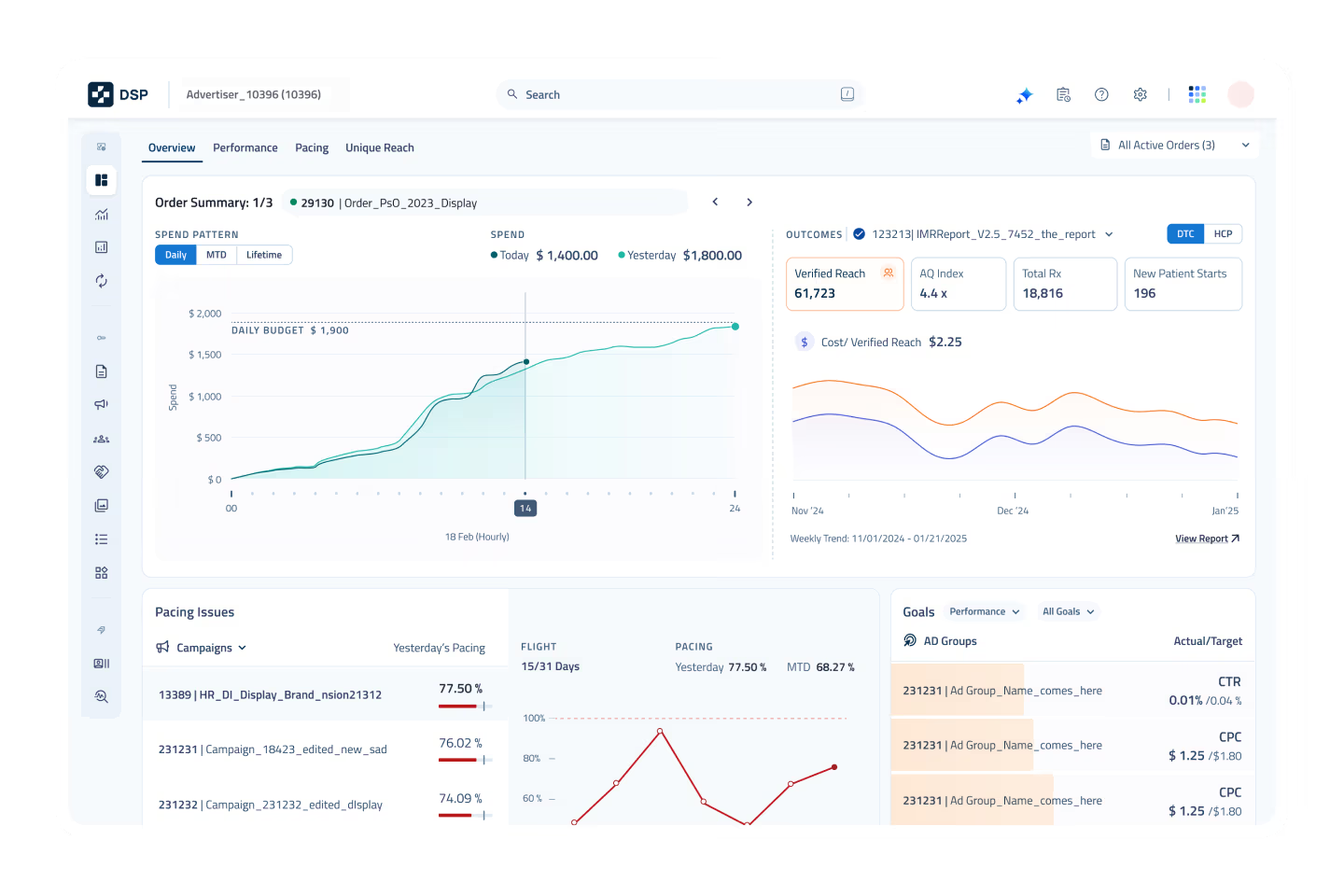
Across the study, CTV outperformed other channels on every key metric: 2.2x higher script lift, 53% higher New Patient Starts rate, and 24% higher Audience Quality among CTV-exposed audiences versus those not reached through the channel.

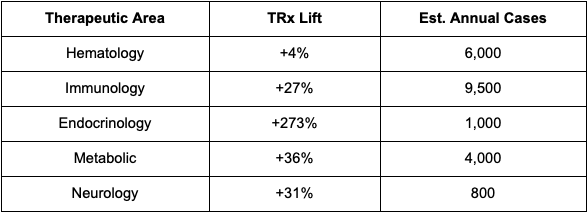
The indication-level findings are even more striking. In an endocrinology/metabolic category with only an estimated 1,000 annual cases, CTV-exposed audiences saw a 273% increase in treatment lift (TRx). That's not a rounding error. That's a channel proving itself in one of the most constrained targeting environments in all of pharma.
Here's how TRx lift broke down across the seven brands studied:
What's Actually Driving Performance
The results reflect a structural advantage that programmatic CTV has over both traditional TV and most digital channels: it pairs the emotional authority of the big screen with the precision of data-driven bidding. For rare disease specifically, this matters in a few ways:
1. Scale anxiety is misplaced. The reflex to avoid CTV for small patient populations assumes you need broad reach to make the economics work. Biddable CTV flips this: you're bidding on the right audiences, not buying broad GRPs and hoping.
2. The big screen drives intent. Rare disease patients and caregivers are motivated, high-information audiences. Reaching them on the living room screen, with the emotional weight that medium carries, creates a different quality of engagement. The lift numbers suggest this is translating into actual prescribing behavior.
3. Programmatic targeting closes the loop. The ability to tie CTV exposure to downstream clinical outcomes (script lift, HCP engagement) means rare disease marketers can hold CTV to the same performance accountability standards as search or endemic display, something traditional TV buying never allowed.
What This Means for Your Next Rare Disease Plan
There are a few practical implications:
- Don't cap out CTV too early in the media mix. The data suggests that even very small patient populations can generate meaningful lift when reached through biddable CTV.
- Tie exposure to outcomes from the start. The lift figures above are only possible because campaigns were structured to measure clinical impact as opposed to just reach or completion rate. Build that measurement framework in at the brief stage.
- Consider CTV as a conversion channel, not just awareness. The TRx lift data positions CTV alongside performance tactics in the funnel, not above them. That changes how it should be weighted in budget allocation.
Rare disease marketing has always required doing more with less. CTV, done right, is increasingly proving that "less" doesn't have to mean lower impact.
Discover more rare disease marketing strategies here.