TV data has become one of the most powerful tools in pharma's targeting arsenal, but only when it's connected to the right infrastructure. We caught up with Scott Nagy, VP of Commercial Partnerships at Samba, to talk about how TV intelligence is reshaping the way pharmaceutical and life sciences brands reach the audiences that matter most.
Question 1: What are the biggest challenges brands face when trying to extend TV strategy across digital channels?
The core challenge is that TV strategy and digital strategy were built in silos, and most organizations are still operating that way. A brand runs a significant linear or streaming TV buy, builds awareness with a relevant patient or caregiver audience, and then...that signal largely disappears when the campaign moves into digital channels. There's no thread connecting the two.
The result is a lot of redundant reach and missed opportunities. You're either over-exposing the same audiences who've already seen your TV creative, or you're running digital to entirely different people and forfeiting the sequencing effect that makes cross-channel campaigns actually work.
The fix isn't just better attribution after the fact; it's using TV viewing data to inform targeting before and during a campaign. Who has been exposed to your message on TV? Who hasn't yet? Those are two very different digital audiences, and they should be treated differently. That kind of TV-informed activation is where we're seeing the most meaningful lift for brands that get it right.
Question 2: What role does real-time data play in making TV campaigns more actionable and measurable?
TV has historically been a "set it and check it later" medium. You run the buy, wait for post-campaign reporting, and by the time you have meaningful data, the flight is over. Real-time data fundamentally changes that dynamic.
At Samba, we're processing real-time viewership signals from opted-in smart TVs continuously, which means we can see what's airing, who's watching, and how that exposure connects to downstream behavior as it's happening. That signal spans over 24 smart TV brands globally, giving us a view of viewing behavior that's both massive in scale and precise at the household level.
For pharma marketers, that translates to a few things: the ability to identify audiences actively watching condition-relevant programming and reach them in adjacent digital channels; the ability to retarget users on web and CTV based on prior TV ad exposure, so awareness built on the big screen doesn't stop there; the ability to identify households exposed to a competitor's TV ads and activate conquest campaigns against that audience; the ability to suppress audiences who've already received adequate TV exposure; and the ability to optimize mid-flight rather than post-mortem.
The shift is from TV as a one-way broadcast to TV as a data layer, one that can inform and improve everything else in the media mix. That's a meaningful change for a category like pharma, where efficiency and precision aren't just performance goals. They're compliance requirements.
Question 3: How is the definition of “reach” evolving in an increasingly fragmented media landscape?
"Reach" used to mean something relatively simple: how many people saw your ad, measured against a broad demographic. That definition is becoming less useful, and in pharma, it was never sufficient to begin with.
The fragmentation of TV across linear, streaming, FAST, and on-demand has made it genuinely difficult to understand who you're actually reaching without data infrastructure that spans those environments. A household might consume the same content across four different surfaces in a week. Are you counting them once or four times? Are you reaching the right person in that household at all?
What we're seeing is a push toward quality-adjusted reach—not just how many, but how relevant. For pharma, that means reach among condition-relevant audiences, verified against real viewing behavior rather than modeled proxies. It also means de-duplicating across linear and streaming so that you're building true unduplicated reach rather than inflating it with cross-platform overlap.
Reach is still important. It's just no longer enough to report it without context.
Question 4: How does your partnership with DeepIntent help pharmaceutical and life sciences brands more strategically reach target audiences across preferred channels?
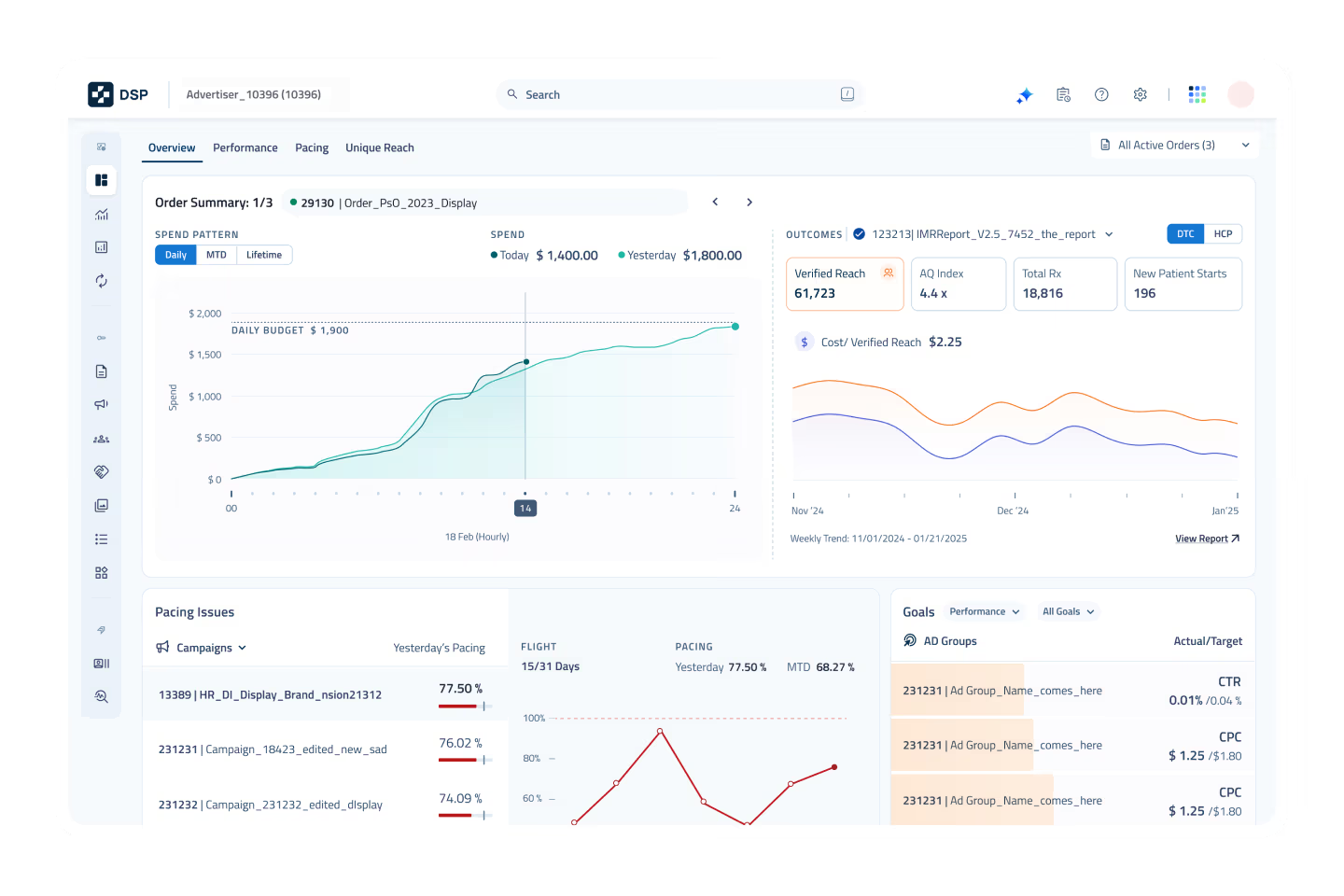
DeepIntent brings something very few DSPs have: purpose-built infrastructure for healthcare advertising — the clinical data, the compliance framework, the real-time outcomes reporting that pharma requires. What Samba adds is the TV layer.
Through our partnership, DeepIntent can scale and activate Samba's TV-derived audiences—built from actual content and ad exposure signals across opted-in smart TVs, not modeled or inferred data—across the key channels where pharma brands reach patients and caregivers at moments of need. That means a brand isn't starting from scratch when they move from TV into digital. They're extending a signal already grounded in real viewing behavior, connected to identity at the household level across a footprint of 24+ smart TV brands globally.
TV remains the dominant medium for pharma DTC. Most patient audiences first encounter a brand's message there. The opportunity—and what this partnership enables—is making sure that awareness doesn't get stranded. It travels with the audience into CTV, display, and other digital channels in a way that's targeted, compliant, and optimized end to end.
Question 5: Can you share an example of how pharmaceutical advertisers are using TV data to drive better campaign performance?
One example that illustrates the opportunity well involves a pharma brand that was trying to grow share of voice in a competitive category. The challenge wasn't just reaching their own potential patients, it was understanding how much ground competitors were gaining on TV, and what to do about it.
Using Samba's TV data combined with third-party health data, the brand was able to identify the 14 million households in the U.S. that had been exposed to competitors' TV ads but had not seen their own campaign. That's a precisely defined, high-value audience—people already being educated about the condition category, just by someone else.
From there, the brand activated digital targeting against those competitor-exposed households, resulting in 15% more effective and accurate targeting compared to their previous approach. It's a use case that wouldn't be possible without TV-level signal. You can't identify competitor ad exposure through digital data alone.
The broader lesson is that TV data isn't just about your own campaign. It's a window into the entire competitive landscape, and brands that use it that way can make much smarter decisions about where to put their digital dollars.