The 2026 World Cup will be one of the biggest media and tourism moments the U.S. has ever hosted. For pharma advertisers, there’s a major opportunity to use a high-attention cultural moment to reach patients, caregivers, and healthcare professionals as they watch, travel, gather, and move through host cities.
The smartest strategy should start with programmatic.
Programmatic gives healthcare marketers the flexibility to activate around World Cup attention without relying solely on scarce, high-priced live-event inventory. Live sports can be powerful, but it is also competitive and variable. In many cases, it should be treated as an awareness-oriented contextual buy rather than a lower-funnel performance tactic.
A programmatic-first approach allows pharma brands to surround the World Cup moment across streaming, online video, connected TV, sports-adjacent content, and digital environments before, during, and after matchdays.
Be Part of the Fan Journey
World Cup audiences will watch more than the live games. Think: previews, highlights, analysis, recaps, interviews, team coverage, and social conversation. That creates a broader content ecosystem where pharma brands can show up with relevant, compliant messaging.
Healthcare marketers need not force a connection to soccer. The most effective campaigns will focus on behaviors surrounding the tournament: travel, crowds, heat, long days, disrupted routines, and time spent outdoors.
A respiratory brand might educate around travel and environmental triggers. A migraine brand could connect to sleep disruption, dehydration, and stress. A dermatology brand might focus on sun exposure. A chronic condition brand could remind patients to stay on track while away from home.
The message should not be about kicking a ball on a field, but something relevant to health in a World Cup–shaped moment.
Use Programmatic to Build Scalable Reach
Highlight CTV and OLV as core channels for activating around World Cup content, with video assets best suited for the available inventory.
Programmatic also enables brands to reach likely soccer fans and World Cup viewers through audience and viewership data, including ACR-based signals and sports fan intelligence. These capabilities can help advertisers extend reach, sequence messaging, amplify sponsorships, and engage audiences exposed to relevant TV or competitive messaging.
For pharma, the key is to use these tools responsibly. Broad contextual relevance, compliant audience strategy, and strong measurement should guide the plan.
Extend the Moment into the Real World with DOOH
Once the programmatic foundation is in place, digital out-of-home (DOOH) becomes the physical-world extension of the campaign.
The World Cup will bring major tourism and fan movement across U.S. host cities. Visitors will move through airports, roadways, transit systems, hotel districts, restaurants, bars, retail corridors, and venue-adjacent areas. Use DOOH to engage audiences throughout these journeys, including airports, major roadways, and areas near venues.
For pharma, DOOH is especially valuable because it is contextual, scalable, and privacy-safe. It can deliver broad health education in high-traffic environments without relying on sensitive individual-level targeting.
Examples might include:
- “Travel can disrupt your routine. Plan ahead before your next dose.”
- “Long days. New city. Don’t let your health routine fall behind.”
- “Heat, crowds, and travel can affect how you feel. Know your triggers.”
- “Need health information while traveling? Start with trusted resources.”
In many cases, unbranded disease education, adherence support, or patient-navigation messaging may be the best fit for DOOH environments.
Make It Local
A U.S. World Cup campaign should reflect the realities of each host city. Miami may call for multilingual creative and heat-aware messaging. New York/New Jersey may require transit, airport, and tourism-district coverage. Los Angeles may lean into airport arrivals, rideshare movement, freeway corridors, and entertainment districts. Dallas and Houston may require strong roadway and heat-related planning.
The strongest strategies will adapt by market, movement pattern, language, time of day, and environmental context.
Measure What Matters
World Cup campaigns should not be judged only by impressions. Pharma marketers need to understand whether their investment reached the right audiences and created measurable value.
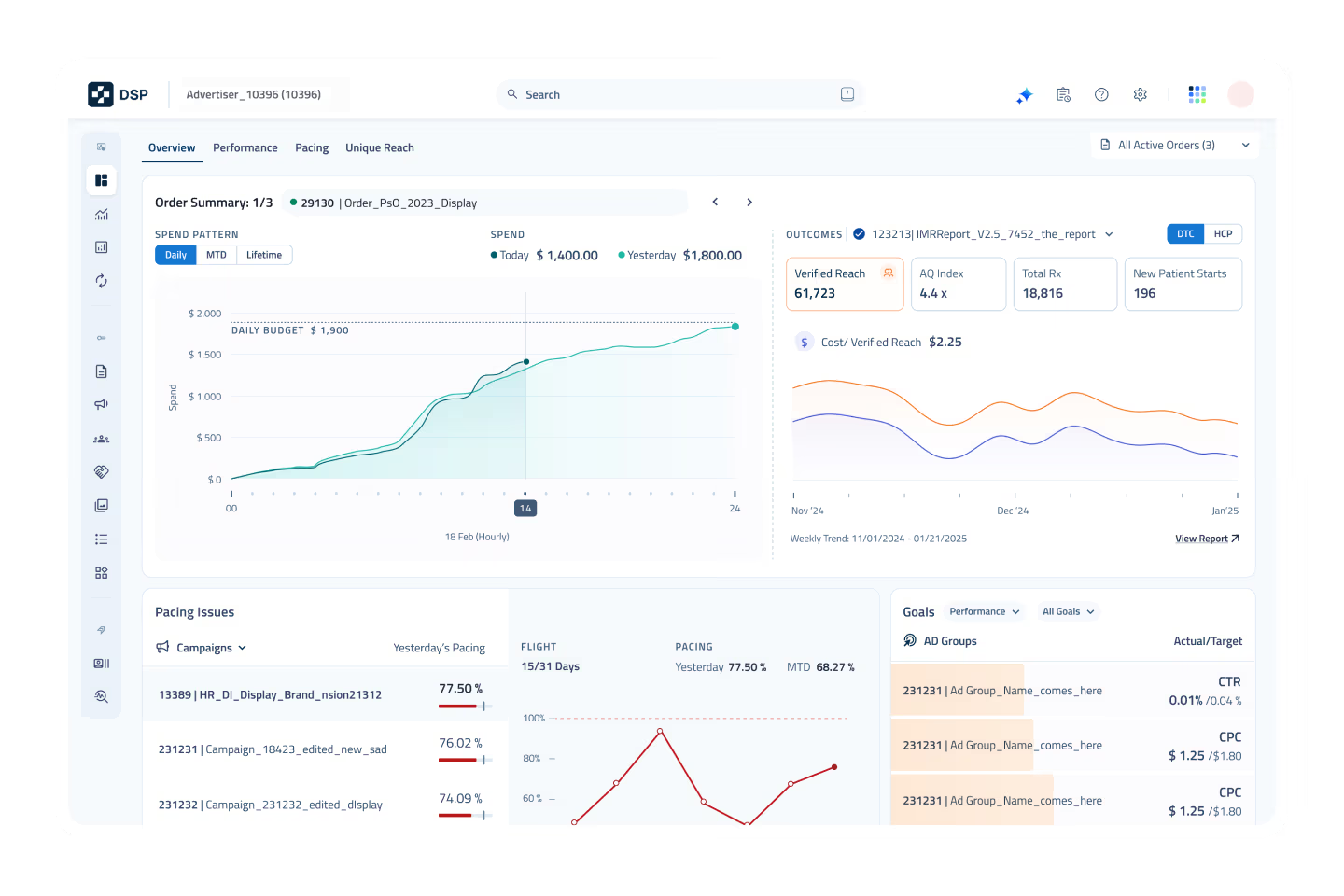
Evaluate campaigns on pharma-relevant metrics such as HCP reach, patient reach, audience quality, qualified doctor visits, total prescriptions, refills, new patient starts, incremental scripts, cost-based metrics, and improvement over time.
That measurement discipline matters. Visibility during a major event is just one goal; equally important goals include meaningful reach, relevant engagement, and measurable business impact.
The Bottom Line
The World Cup will create a rare concentration of attention across the U.S. For pharma marketers, the opportunity requires a disciplined approach.
Start with programmatic to reach World Cup viewers across streaming, online video, CTV, and sports-adjacent digital environments. Then use DOOH to extend that strategy into airports, roadways, transit hubs, hotel districts, and venue-adjacent areas where tourism and fan movement are concentrated.
The brands that win the moment will be the ones that understand how people watch, travel, gather, and manage their health during a major cultural event—and use programmatic and DOOH together to meet them there.