July is Chronic Condition Awareness Month, and the numbers behind shape what a chronic condition media plan has to do differently. Roughly 129 million Americans, nearly 60% of adults, live with at least one major chronic condition, and 40% manage two or more at once. That's most of the adult population. Chronic condition sufferers sustain relationships with a diagnosis and a prescriber that lasts years.
Why Chronic Disease Doesn't Fit a Campaign Flight
That long timeline is what separates chronic disease marketing from almost everything else in pharma. A campaign built for an acute condition can succeed by building awareness, driving a script, and moving on. Chronic disease doesn't work that way, because the disease itself doesn't resolve. A patient starting a new diabetes therapy needs titration messaging within weeks and adherence support months later. A heart failure patient gets handed between a cardiologist, a PCP, and a hospitalist after every readmission, on a timeline that has nothing to do with a campaign flight. An asthma or COPD patient's whole risk profile shifts with the season.
These are all different conditions with important similarities: the patient and the prescriber are both moving targets, over a much longer horizon than most media plans are built to track.
That horizon is also where multimorbidity, the 40% of people managing two or more conditions at once, becomes critical. A patient's diabetes affects how their heart failure gets treated; a COPD diagnosis changes what a cardiologist is willing to prescribe. Chronic condition marketing that treats each diagnosis as an isolated funnel is working from an incomplete picture of the very consumers and providers it's trying to reach.
Data That Can Act: DeepIntent Helix and Cortex in Practice
Regardless of the condition in the brief, none of this is solvable with a one-size-fits-all audience. It takes longitudinal data most brands can't assemble on their own, and it takes turning that raw data into something a model can actually act on — structured, connected, and ready for audience-building. That’s what DeepIntent Helix™, the healthcare marketing cloud, was built to do.
Instead of waiting for a campaign to end to learn what happened, DeepIntent Helix lets agencies see, before the brief is even written, which physicians in a therapeutic area are diagnosing but not yet prescribing, where adherence is starting to slip, and which channels a given specialist actually pays attention to. For any chronic condition brand, that means building HCP and DTC audiences around real diagnosis, prescribing, and adherence signals rather than NPI lists or age-and-gender proxies, and catching a patient at risk of falling off therapy while there's still time to intervene.
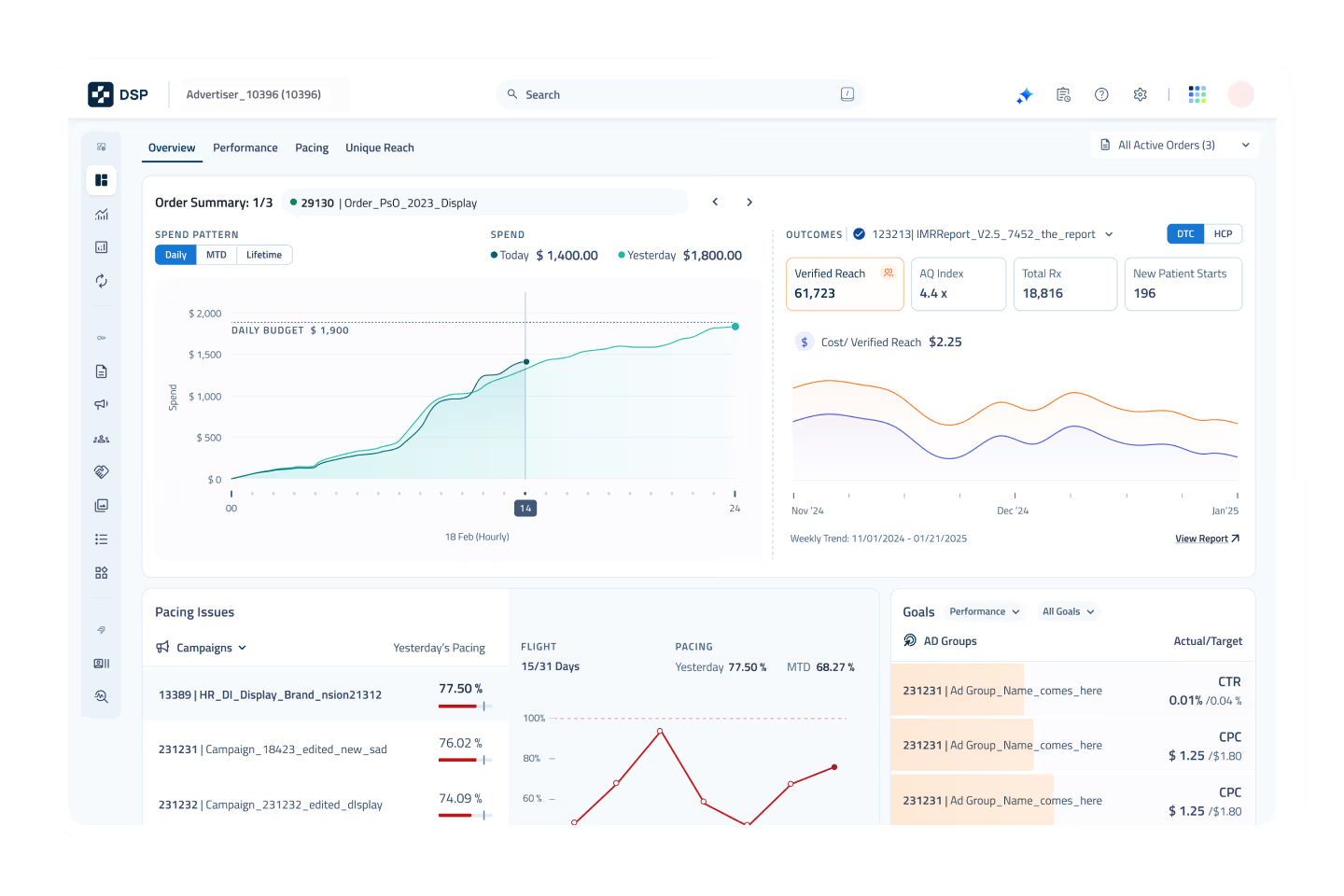
Once that audience exists, it has to reach people somewhere real, for as long as the condition requires it. DeepIntent Cortex™, our DSP, has added inventory and workflow this year built for exactly that kind of long-running, precision-first campaign. New point-of-care and EHR placements through epocrates, OptimizeRx, and Lane4 put messaging in front of physicians at the moment they're actually making a treatment decision, whatever the specialty. AI-driven inventory recommendations use recent engagement data to surface the sites and deals indexing highest for a specific audience, instead of a generic one.
Chronic disease, as a category, rewards marketers who can see further out and catch problems earlier, whatever the diagnosis. A marketer who can spot adherence risk two months before a patient lapses, or find the physicians treating an indication but never prescribing a therapy for it, is closing a gap in care that a generic audience list could never reach. That's what precision marketing owes patients living with a chronic condition.