Two people can look identical on paper and feel very differently about a treatment. We asked Tunnl’s Jeff Teng how building audiences around what people actually believe can change a pharma campaign.
1. Tunnl audiences are built from real survey data. What does that change for pharma marketers?
A persona in a research deck can help you understand your customer. Historically, turning it into an audience for advertising usually means picking the closest age range, interests, and other targeting options available in the platform, or relying on off-the-shelf audiences built by broad category data. You’re trying to recreate the people described in the research, and a lot gets lost along the way.
Our audiences start with survey responses from people who tell us what they think, what matters to them, and how they make decisions. We use those answers to build a model that finds other adults across the U.S. likely to share those views. That gives media buyers an audience that scales and is built around the insights in the research, without having to translate a persona into a set of platform filters.
For pharma marketers, that could mean reaching people who distrust a particular treatment, intend to pursue a particular vaccine, or are more comfortable engaging online than in person with medical treatments. Those attitudes can help shape both who you reach and what you say to them, without making a specific health condition the basis for targeting.
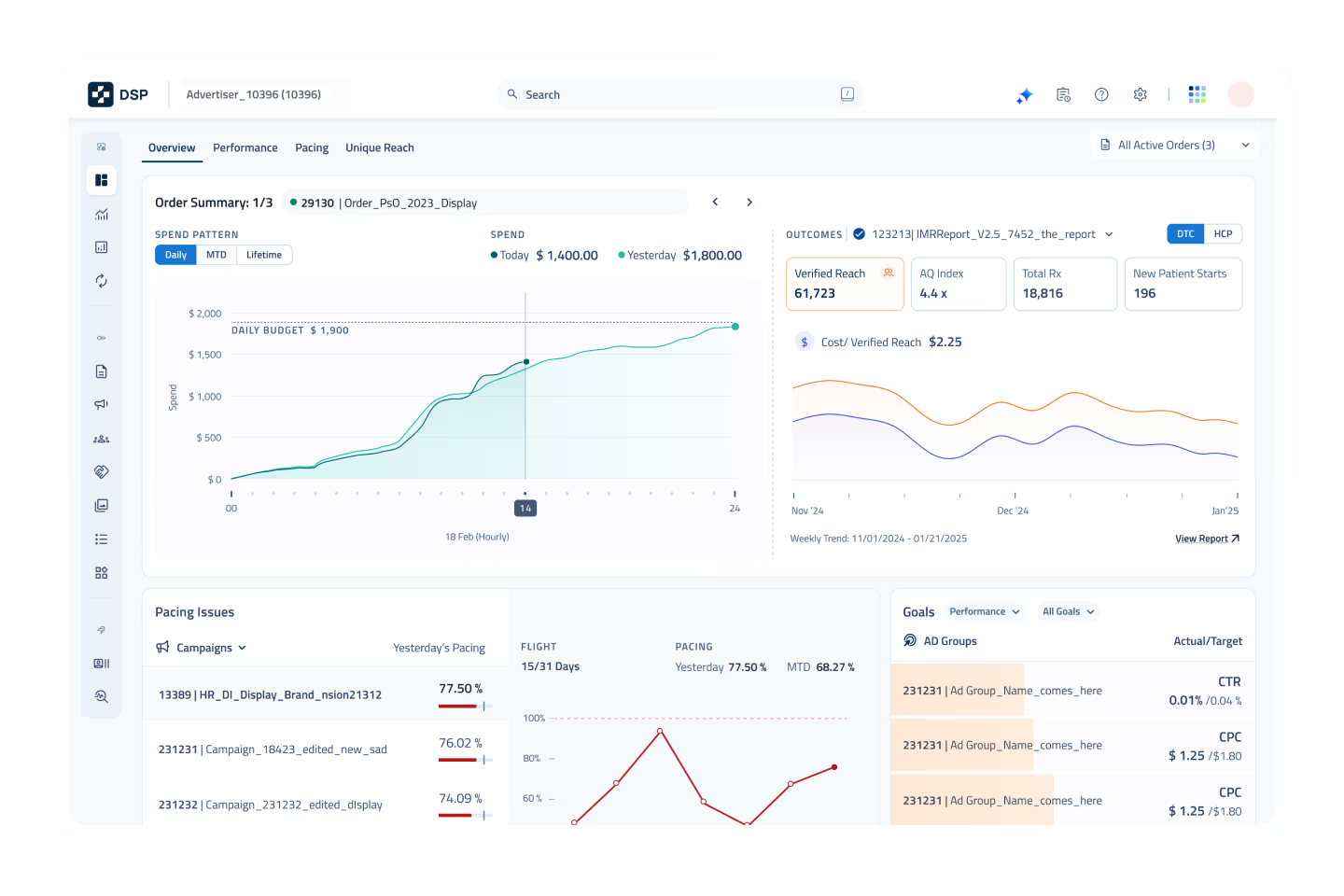
Those attitudes are only useful if a brand can act on them. Tunnl audiences are available through DeepIntent, so brands can put those attitudes to work in a campaign without adopting a new platform.
2. Can you walk through a specific use case where this kind of opinion-based audience changes how a brand should approach targeting?
We’ve seen success with some of our platform users across major healthcare systems, medical device manufacturers, and biotech companies, including a 70% reduction in cost per click when campaigns are built around a precise, research-informed audience instead of a broad demographic buy.
Take audiences built around vaccine intent, like who’s likely to get a flu shot or a COVID booster this season, or around confidence in FDA approval processes—those are behavior- and perception-based, not demographic. That means two people who look identical on paper can land in completely different audiences depending on what they actually believe.
For a brand trying to reach people who are hesitant about a treatment or unsure about a new therapy, that’s a very different starting point than assuming all “women 35 to 54” behave the same. You’re targeting the behavior itself, not a proxy for it. There are endless ways to creatively apply this to marketing campaigns.
3. Where do you see these types of audiences going next given the trends in the marketplace?
At Tunnl, we see massive potential in connecting audience research directly to real-time ad exposure. Research tells us who is open to a message, but our ad viewership data shows what advertising they’ve already experienced. Marketers can use this extra layer to plan more precise follow-up strategies.
For example, if an audience has seen an ad for a competing over-the-counter medication, a brand can use that insight to share relevant information about its own option. That creates opportunities for education and awareness, as well as more effective targeting.
Beyond that, we’ll keep researching how consumers navigate a complex healthcare system, such as where they look for information, what gets in their way, and what shapes their decisions. What excites me about Tunnl’s next chapter is bringing those insights together to help brands make better decisions about who to reach, what to say, and when to say it.
4. Survey-based audiences have historically lived in research decks, fully disconnected from media plans. What has to be true for insights like these to actually reach a campaign?
Historically, the breakdown happens at the handoff. A research team learns something real about an audience, it goes into a deck, and by the time anyone tries to turn it into a media buy, the insight is stale or it just doesn’t translate into something a DSP can target against. Two good systems, surveys and activation, never actually talk to each other.
The missing piece is a direct connection between the two, which is precisely what this partnership creates, and the exact problem Tunnl was built to solve. Tunnl audiences plug straight into DeepIntent’s healthcare programmatic infrastructure, so brands don’t need a new platform, a new workflow, or a new training deck. Instead, those audiences show up right where healthcare marketers are already buying.
Tunnl brings the research-backed audience intelligence, DeepIntent brings the healthcare-specific activation and measurement layer, and together you get insights that reach a campaign while it’s still accurate.
5. In a highly regulated industry like pharma, every data source gets scrutinized before it’s approved for use. How does Tunnl validate accuracy and protect consumer privacy throughout the process?
The short answer is that we validate accuracy the same way we build our audiences: everything is research-backed. We ask real people real questions through opt-in surveys, then combine those responses with aggregated data to build predictive models for the entire U.S. population. These scores aren’t deterministic, there’s no personally identifiable information involved. Instead, they’re predictive scores tied to a likely perception, sentiment, or behavior.
This is what lets us build segments that are precise, while protecting the individual responses.
The identity piece is probably what marketers care about most: no individual ever gets exposed to us or to the brand. Whether someone is using the Tunnl Platform for audience insights or looking to activate their audience, everything is secure. When an audience is delivered to DeepIntent or any other platform, it goes as an anonymized ID matched to digital signals, never a name. That’s the model: real research grounding the audience, with a strict privacy barrier around anyone’s actual identity the entire way through.
Some of the most interesting applications will probably come from DeepIntent customers putting these audiences to work on their own campaigns. We’re looking forward to seeing what they find.