A physician logs into the EHR before she says hello to her first patient, and she'll be back in it dozens of times before she signs off. The EHR has become one of the most-used pieces of software in healthcare, and for brands trying to reach providers when it counts, that makes it one of the most valuable channels available. This piece covers why EHR marketing matters, where it shows up in the care journey, how to buy it, and how to build a strategy that works.
Why Healthcare Brands Should Care About EHR Marketing
The case for EHR marketing comes down to proximity: no other channel puts a message this close to an actual clinical decision. Three factors explain why.
Providers Spend More Time in the EHR than Almost Anywhere Else
Providers spend roughly a third of exam-room time looking at the EHR instead of the patient, and outside the exam room the time spent is even greater: for every hour of direct patient care, physicians log about two hours on EHR and desk work. Prescribing decisions and treatment plans get worked out in that system, so no other channel gets closer to a clinical decision.
The Channel Reaches Audiences When They Are Most Receptive
Compare this to display or social, where a healthcare ad competes with a news feed or vacation photos. EHR messaging shows up in a clinical context instead, while a provider is weighing a patient's treatment or a patient is prepping for a visit. That relevance is why EHR marketing tends to outperform broader digital placements on outcomes like script lift.
Traditional Access to Providers Keeps Declining
In-person rep access has been shrinking for years, and digital fatigue makes email and display harder to break through. EHR marketing fills that gap, putting brand information inside tools providers already trust, built into the workflow rather than competing for attention like an inbox or a banner ad.
Choosing the Right EHR Media Buying Model for Your Strategy
How you buy EHR inventory matters almost as much as what you say once you're there.
Direct Buys With Individual EHR Platforms
A direct buy means contracting straight with an EHR vendor that accepts advertising. It gives you control and exclusivity, but scaling it means negotiating with each platform on its own, and the market has more than 600 EHR systems, only 20 to 25 percent of which accept advertising, mostly the larger ones.
Media Aggregators
Aggregators bundle contracts across multiple EHR platforms into one buy, simplifying access and extending reach. The tradeoff is limited inventory, uneven targeting precision, and frequency management that's harder to control, which can hurt the provider experience.
Programmatic EHR
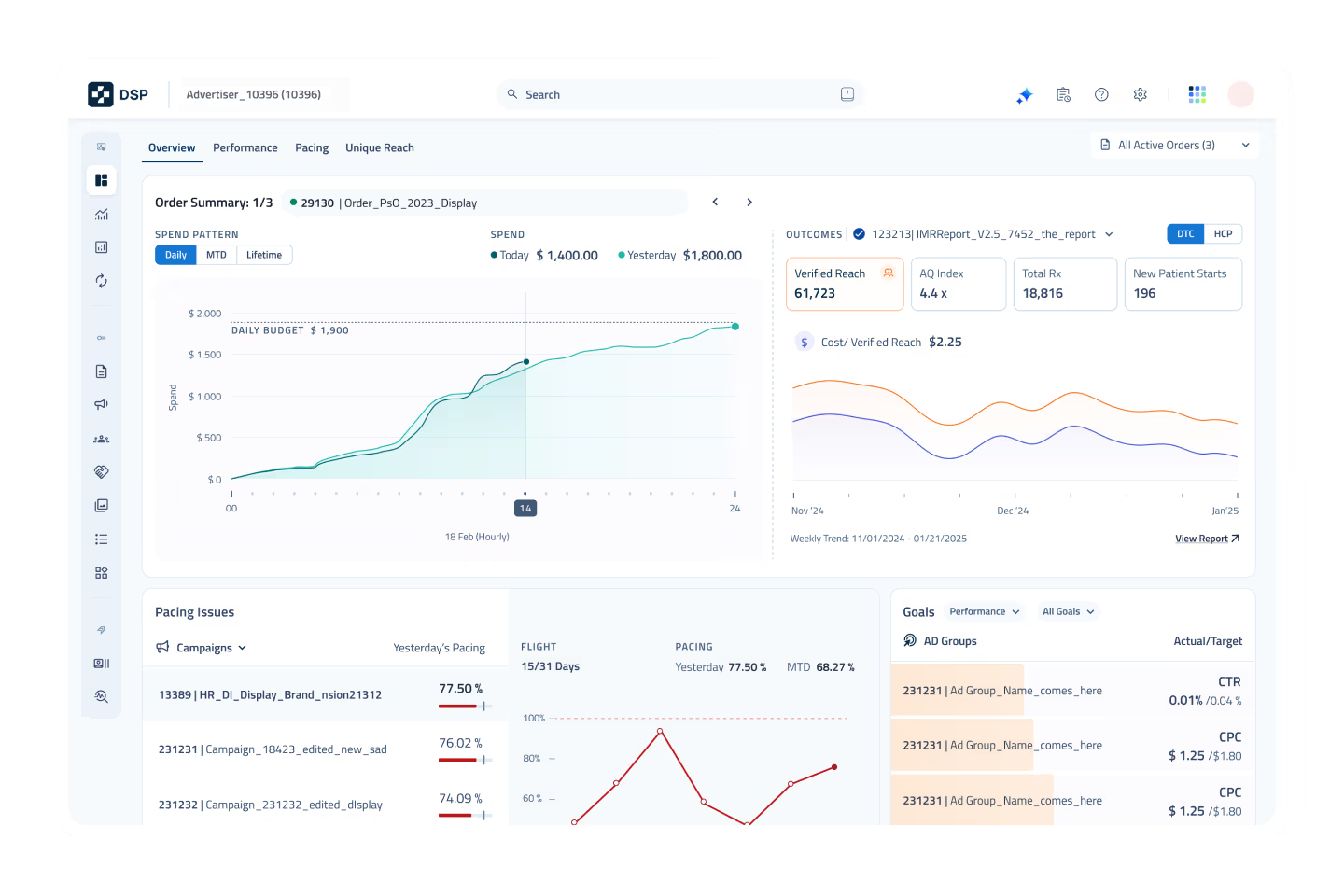
Programmatic is the newest and most capable buying model, giving brands access to EHR inventory through a demand side platform with real-time bidding, audience targeting, and frequency controls built in. Its real advantage is plugging into the same infrastructure running your display and CTV, so measurement ties EHR impressions to outcomes instead of leaving them isolated.
How to Make Your EHR Marketing Strategy Work for the Right Results
Buying the inventory is the easy part. What separates brands that see clinical impact from those treating EHR as another line item is what happens next.
Start With Audience Precision, Not Inventory Volume
NPI-level targeting and clinical audience data should shape your EHR strategy before reach targets do. A tightly defined audience reached at the right moment beats a broad reach play here. Match your target audience against what's actually available in EHR, and confirm your partner can reach those specific providers or patients.
Design Messaging for the Workflow
EHR creative has to work differently from standard digital ads. The audience is in a clinical mindset, and anything that feels like a traditional ad gets ignored or resented. A savings offer on the e-prescribing screen or a short guideline update earns attention because it adds value instead of interrupting.
Connect EHR to Your Full Omnichannel Strategy
EHR marketing performs best alongside other channels. A provider who sees a brand message on a medical journal site, then hits the same message in the EHR during a relevant encounter, gets a compounding effect neither channel produces alone. Shared audience data and consistent identity resolution make that possible.
Measure What Actually Matters in EHR
Click-through rates in EHR environments run low, because providers are focused on their patients, not clicking ads. That doesn't mean the channel is underperforming; it means click-through is the wrong yardstick. Look instead at script lift, new-to-brand prescribers, and verified reach against your target NPI list.
Mistakes You Should Avoid When It Comes to EHR Marketing
The biggest one is treating EHR like a media checkbox rather than a workflow to design around. Buying broad, unfiltered inventory instead of NPI-precise audiences wastes budget on providers who were never going to prescribe the product. Running the same generic creative that works on display inside a clinical environment tends to backfire, since providers notice when something doesn't respect their workflow. And judging performance on click-through rate alone may pull budget from a channel that's driving script lift as opposed to clicks alone.
Choosing the Right Partner for Your EHR Marketing Needs
The right partner brings programmatic access to EHR inventory, clinical data for precise targeting, and cross-channel measurement built on HIPAA-compliant infrastructure. DeepIntent's omnichannel EHR marketing approach has delivered up to 1.5x Trx growth among HCPs by connecting EHR data with the rest of a brand's media plan. If you're ready to see how that works for your brand, schedule a demo with our team.
Learn more about how EHR and point-of-care advertising work here.