In-person access to healthcare providers keeps shrinking, and the channels where HCPs actually spend their time have shifted almost entirely to digital. That shift raises an obvious question for healthcare marketers: how do you reach a specific provider with any confidence, rather than just hoping the right person happens to see your ad? NPI targeting is the method built to answer that, letting marketers reach verified HCPs at the individual level instead of guessing based on broad demographics. This guide covers what an NPI is, how NPI targeting works inside a real campaign, why it outperforms older HCP targeting methods, and what separates an effective NPI strategy from a mediocre one.
What Is an NPI and Why Does It Matter for Healthcare Marketing?
An NPI, or National Provider Identifier, is a unique 10-digit number assigned to every covered healthcare provider under HIPAA. Type 1 NPIs belong to individual practitioners; Type 2 NPIs belong to organizations like hospitals and clinics. Because every provider who bills for care already has one, the NPI functions as a stable, government-issued identity anchor. That's exactly what makes it the backbone of modern HCP advertising: a single, verifiable number that ties an ad impression to a real, identifiable provider.
What Is NPI Targeting?
NPI targeting is a deterministic method that uses the NPI itself as an identity anchor to deliver ads to specific, verified HCPs, rather than an audience segment that merely resembles them. Compare that to broad behavioral or contextual targeting, which reaches people who look like the target based on browsing patterns or site content, with no guarantee any of them are actual providers. NPI targeting closes that gap, enabling something closer to true one-to-one engagement in healthcare marketing.
How NPI Targeting Works in a Programmatic Workflow
Here's what NPI targeting actually looks like inside a modern programmatic campaign, from building the list through in-flight optimization.
Building and Segmenting Your NPI List
Lists get built from first-party data, third-party sources, or a blend of both. From there, segmentation matters: by specialty, prescribing behavior, geography, patient flow, or specific campaign goals. Treating the NPI list as one flat audience wastes the precision the method is built to provide.
Matching NPIs to Digital Identities
Deterministic identity resolution links each NPI to device IDs and digital profiles, so a campaign can reach a verified HCP across whatever channel they're using. Match rate quality and refresh frequency matter here; a stale or low-confidence match undoes the accuracy NPI targeting is supposed to deliver.
Activating and Optimizing Across Channels
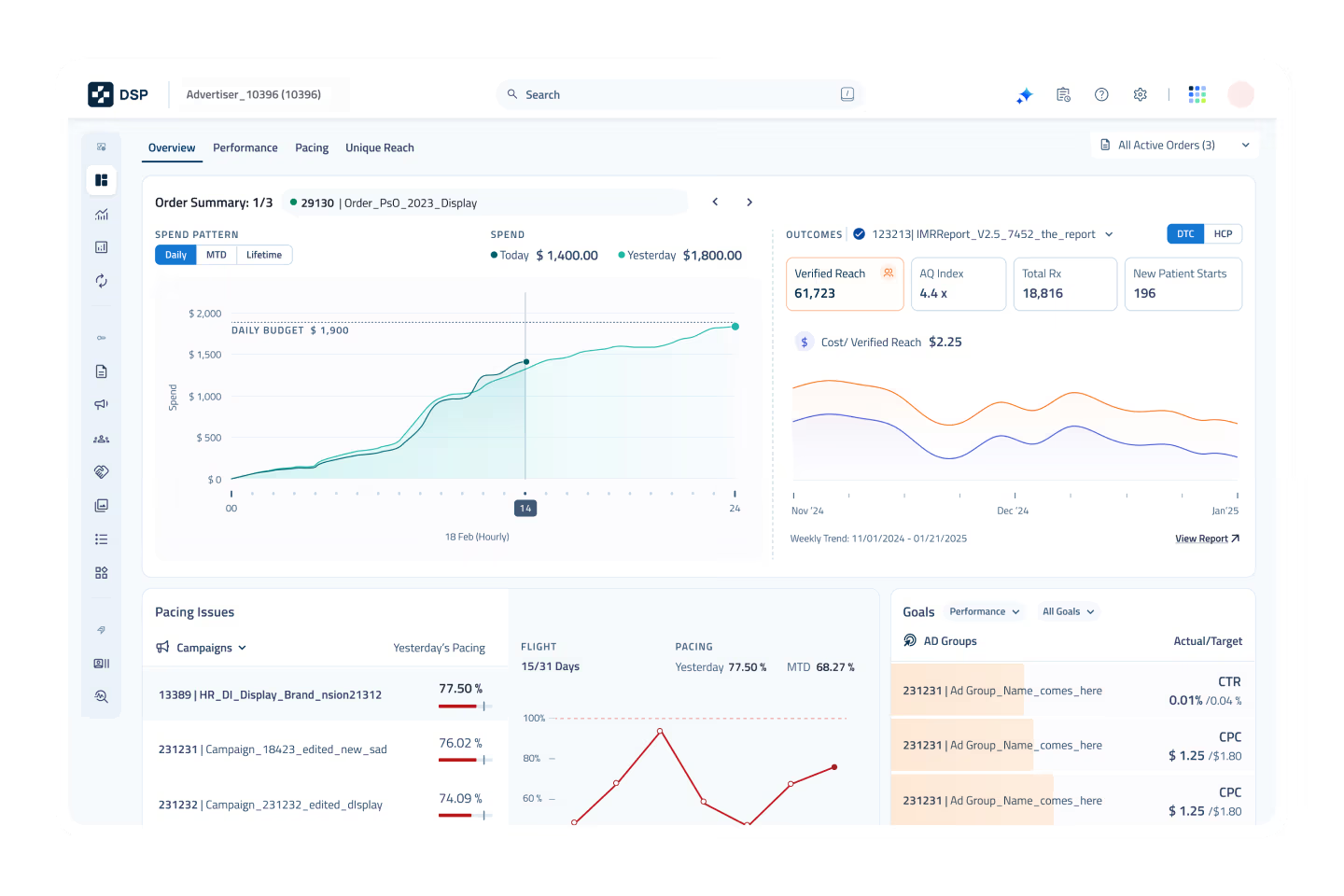
Once matched, NPI audiences get activated programmatically across display, CTV, audio, native, endemic sites, and EHR. Provider-level data then feeds back into optimization, shifting budget toward the segments that are actually performing while the campaign is still live.
Why NPI Targeting Outperforms Traditional HCP Targeting Methods
The core advantages come down to accuracy and accountability. Verified audience precision at the individual level cuts wasted impressions on people who aren't providers at all. Provider-level reporting makes real optimization possible instead of guessing from aggregate numbers. And because it doesn't depend on third-party cookies or inferred behavioral signals, NPI targeting stays privacy-safe as those older mechanisms keep breaking down.
Where NPI Targeting Fits Across Channels
NPI targeting activates across display, video, CTV, audio, native, endemic sites, and EHR placements. Cross-channel activation matters because HCPs move between devices and environments constantly throughout the day: a phone between patients, a laptop at the nurses' station, a tablet at home. Reaching them consistently requires an identity that travels with the provider rather than staying locked to one channel.
What Makes an NPI Targeting Strategy Effective
Building the list and matching it to devices is only the setup. The strategic layer is what creates campaigns that see real clinical impact.
Go Beyond Specialty and Build Lists From Clinical Data
Lists built from prescribing behavior, condition codes, and patient flow outperform lists built from specialty alone. A static specialty list misses HCPs who treat relevant patients outside their primary taxonomy, which is a meaningful gap when those providers are prescribing anyway.
Layer Contextual Signals on Top of Your NPI List
Reaching the right HCP is only half the equation. Layering contextual targeting on top ensures the message shows up while that HCP is engaging with clinically relevant content.
Keep Your NPI Lists Dynamic
Lists need continuous refreshing based on real-time patient flow and prescribing changes. An HCP who was high-value last quarter may not be this quarter, and a dynamic list built from regularly updated clinical data keeps the campaign focused on providers most likely to act now.
Manage Frequency at the NPI Level Across Channels
Frequency management needs to happen at the individual provider level across every channel, not separately within each one. Without unified caps, the same HCP can end up overexposed on display while barely reached on CTV.
Coordinate HCP and Patient Messaging Around the Same Moment
NPI targeting works best when HCP campaigns are coordinated with patient outreach around the same clinical window. When both audiences get aligned messaging at the same time, the compounding effect on treatment decisions is meaningfully stronger than that of either campaign running alone.
How to Measure NPI Targeting Performance
Click-through rates are often misleading in HCP campaigns, since providers are focused on patients rather than clicking ads. The metrics that actually matter are audience quality scores, verified reach against the target NPI list, script lift, new-to-brand prescribers, and provider-level engagement data. These reflect whether the right providers were reached and whether that reach changed behavior.
NPI Targeting as an Essential for Any Healthcare Demand Side Platform
NPI targeting capability should be a baseline requirement when evaluating any healthcare DSP. Look for match rate accuracy, depth of identity resolution, clinical data integration, cross-channel activation, and provider-level reporting. The DeepIntent platform is built around exactly this kind of precision, matching campaigns to verified NPIs at high rates and connecting that accuracy to measurable outcomes across the full media plan. Book a demo with our team to see what that can look like for your brand.
Discover more about scaling HCP engagement here.