.png)
Rare disease drug development has always required a different playbook. Patient populations are small and fragmented. Diagnostic journeys are long and uncertain. The path from discovery to treatment access is often slow, even when science moves quickly.
Artificial intelligence (AI) is changing that.
Across biotech and pharma, AI-powered approaches are helping teams uncover insights faster, prioritize with greater confidence, and move promising therapies through development more efficiently. But innovation cannot stop at discovery. For rare disease therapies to truly make an impact, commercialization must evolve alongside science.
From Discovery to Access, Faster
In drug development, AI is already proving its value by accelerating target identification, improving trial design, and surfacing patterns hidden within complex biological and clinical data. Companies like Pathos are demonstrating how advanced AI can compress timelines and focus effort where it matters most.
For rare disease patients, this speed matters. Earlier breakthroughs mean earlier diagnoses, faster access to treatment, and better outcomes.
As these therapies approach launch, however, a new challenge emerges. How do brands reach the right specialists, patients, and caregivers in a way that is precise, efficient, and compliant?
Commercialization Requires Predictive Intelligence
Rare disease commercialization is fundamentally different from mass-market pharma. Success depends on understanding where diagnosis is happening, which HCPs are most influential, and when patients and caregivers are actively seeking answers.
This is where AI-powered predictive intelligence becomes critical.
Rather than relying on static plans or channel-specific tactics, modern healthcare marketing requires systems that can connect real-world healthcare signals, audience behavior, and media performance. These systems help marketers anticipate opportunity, not just react to it.
Predictive intelligence allows brands to identify emerging moments of intent, prioritize high-value audiences, and align engagement across HCP and patient touchpoints. The result is more efficient spend, clearer insight, and marketing that supports the diagnostic and treatment journey rather than interrupting it.
Orchestration Across HCP and Patient Engagement
As spend diversifies across channels and contexts, orchestration becomes the differentiator.
At DeepIntent, we believe the future of healthcare marketing is not about choosing between channels. It is about orchestrating them using Health Intelligence™powered by AI.
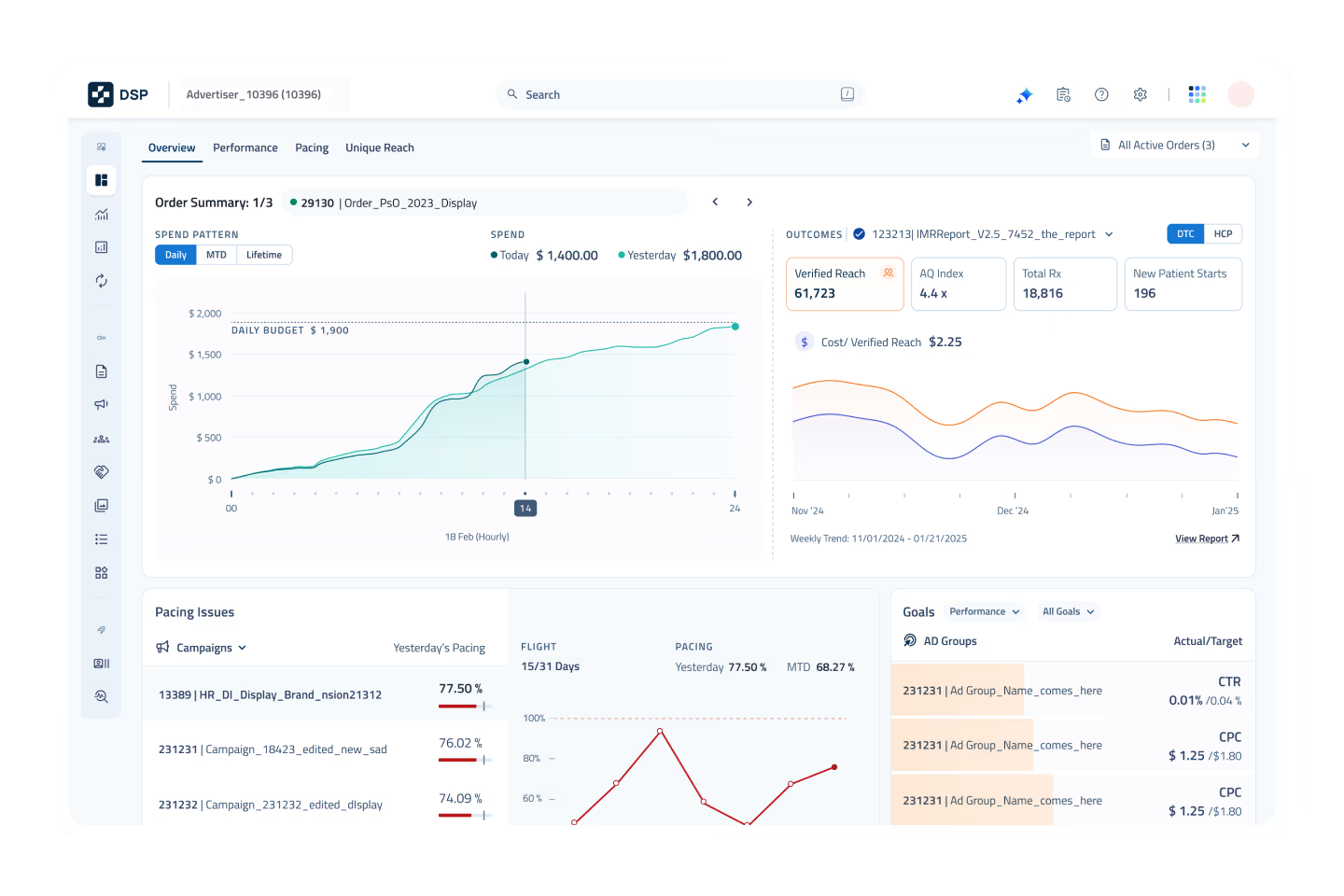
By unifying real-world healthcare data, media performance signals, and audience intelligence into a single platform, marketers gain the clarity, control, and confidence to act. Strategies can adapt as new signals emerge. Engagement can be coordinated across HCP and patient touchpoints. Execution becomes faster and more efficient without sacrificing precision or privacy.
For rare disease brands, this orchestration is essential. Limited budgets must work harder. Every interaction must be relevant. Every moment matters.
Reaching the Right Moment Drives Better Outcomes
Rare disease marketing is ultimately about timing.
Reaching a specialist when a diagnostic rethink is happening. Supporting patients and caregivers when questions turn into action. Reducing the time between awareness, diagnosis, and treatment.
AI-powered optimization, such as DeepIntent Outcomes Optimization, helps brands move from broad awareness to meaningful engagement. It aligns marketing with real-world healthcare behavior, enabling faster learning cycles and more impactful outcomes.
This is not just better marketing. It is a more effective way to support patients on complex and often emotional journeys.
Looking Ahead
As AI continues to evolve, the next chapter will take this model even further.
Emerging agentic AI systems will move beyond generating insight to planning and activation. These systems will continuously monitor health signals, evaluate performance, and coordinate actions across channels with minimal friction.
While still early, this evolution points toward a future where healthcare marketing platforms become true orchestration engines, driving more efficient commercialization, accelerating access to life-changing therapies, and improving patient outcomes.
That is the direction the market is moving. And it is the future we are building toward.
Check out our Rare Disease Playbook for more of our thinking around shortening rare treatment journeys.