Every spring, agency investment teams sit down with NBC, Disney, Paramount, Google, Fox and a dozen other publishers to commit hundreds of millions of dollars against audience guarantees that won't fully play out for another 18 months. Then the real work starts: turning each dollar commitment into impressions actually delivered, across a portfolio of brands and campaigns, over the course of an entire TV year.
By midseason, a single agency can be managing hundreds of PMP and PG deals at once, spread across a thousand budget lines and a hundred concurrent campaigns. Tracking whether every one of those deals is on pace to hit 100% of its committed spend by hand simply isn't realistic.
When One Commitment Spans Hundreds of Deals
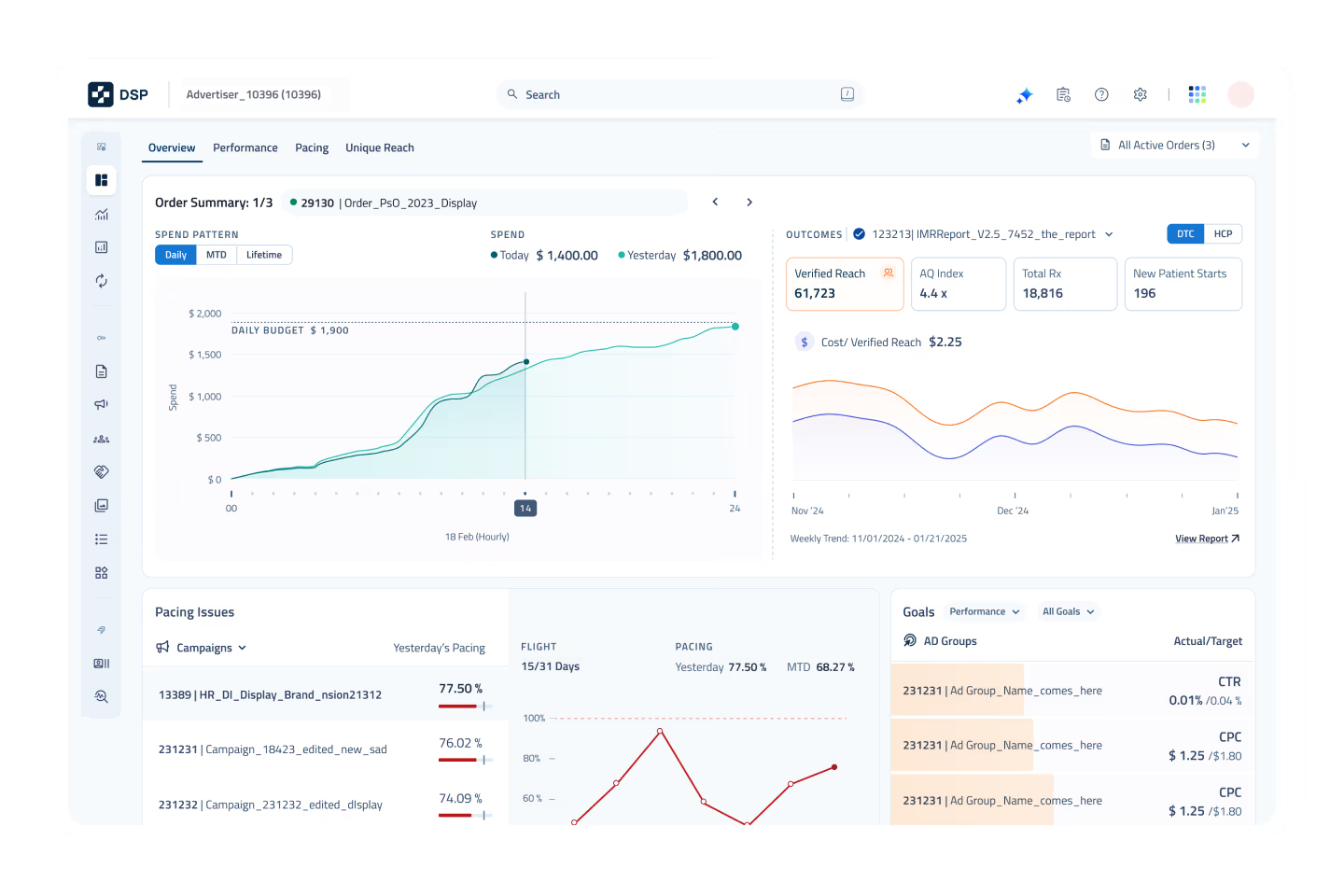
That's the problem DeepIntent built its new Commitment Manager to solve. Live now in DeepIntent Cortex™, our DSP, it lets an agency user or supply partnership lead define each upfront commitment and the deals tied to it, then automatically tracks spend against that commitment as the year progresses, regardless of how many advertisers, campaigns, or ad groups are drawing down the budget.
The stakes are real: over 65% of programmatic CTV money gets allocated during upfront season, and a commitment that falls too far behind is hard to recover before the window closes. That gap can translate into higher eCPMs or lost incentives. Commitment Manager's built-in thresholds flag slow pacing early, often within days of a deal going live, giving traders and investment teams time to adjust before a shortfall becomes a problem.
Why Programmatic Upfronts Are So Complex
For readers newer to programmatic upfronts, two deal structures carry most of this weight. Programmatic Guaranteed (PG) deals behave more like traditional linear TV buys: the publisher reserves specific inventory at a fixed CPM, and the buyer is obligated to purchase it. The publisher decides which inventory qualifies and which audience sees the ads; the DSP serves creative, records impression and completion data, and maps each impression back to a user or household.
Private Marketplace (PMP) deals trade that certainty for flexibility. Publishers curate pools of upfront inventory at negotiated floor prices, and agencies can bid on it, but winning isn't guaranteed. In exchange, buyers get more control over CPM pricing and audience targeting, and publishers often bundle several PMPs into one larger upfront commitment. That layering is exactly the kind of complexity Commitment Manager was built to untangle.
Built for the Future of Pharma CTV
As more pharma brands lean into CTV advertising, tools like this are becoming central to how media teams balance delivery efficiency and content quality against real-world campaign outcomes.