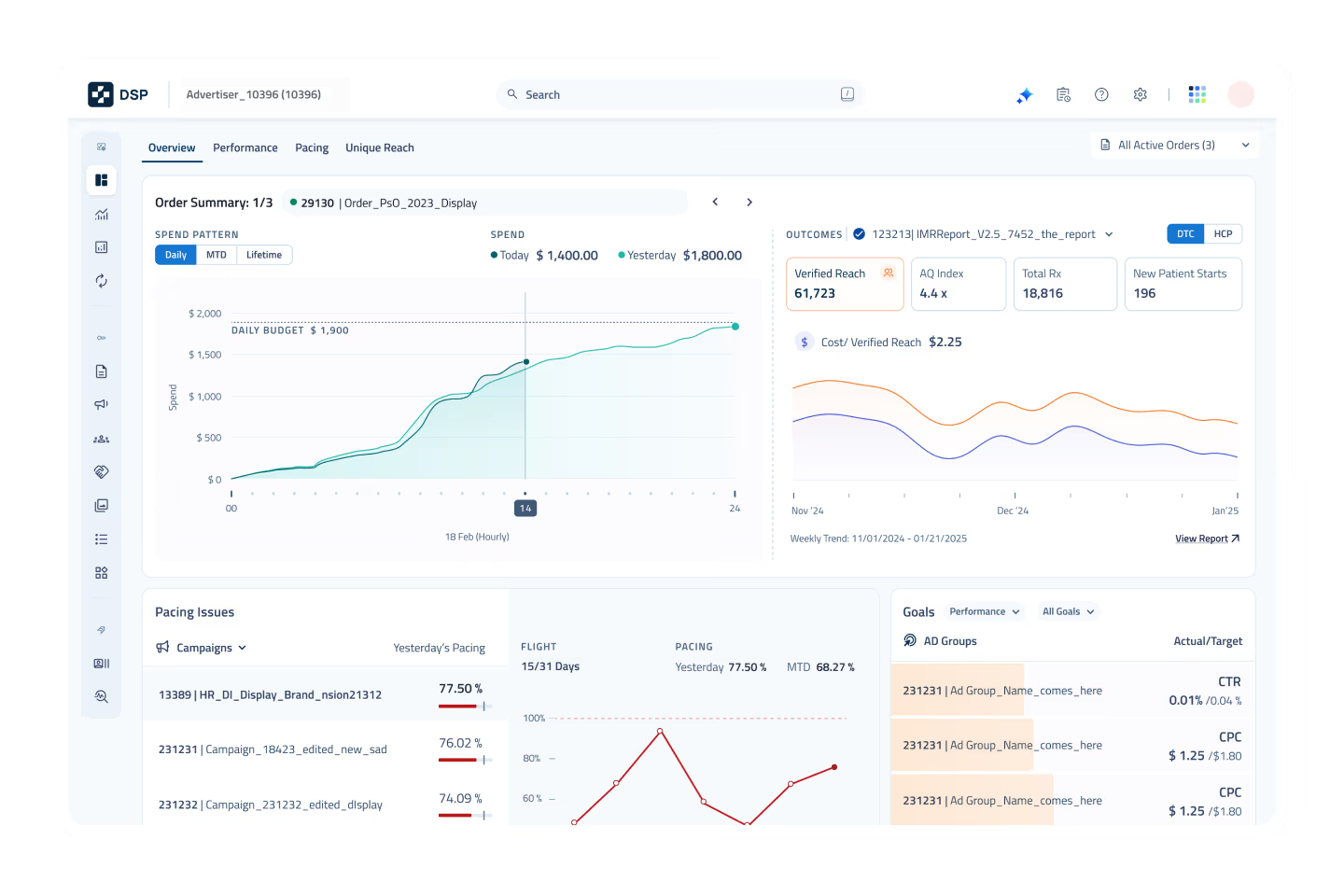
Pharma marketing teams face unprecedented pressure to prove real-world ROI. Kate Cronin, CMO at Medtronic Diabetes, summarized the mandate clearly: "We need to demonstrate real-world value and constantly show in real-time that the marketing is working."
DeepIntent built its foundation on connecting media metrics to health outcomes. This year we introduced a set of Cortex enhancements aimed at a specific part of that commitment: giving marketers more control over which inventory they buy, and more precision in how the DSP decides what to bid on.
Best inventory, first
As pharma advertisers and their agency partners buy more of the open internet, finding inventory isn't the challenge—it’s steering toward impressions that drive real brand value while keeping costs down.
Traditional DSP setups rely on blunt choices. Legacy approaches push pre-packaged "top publisher" lists that act like black boxes, locking agencies into rigid, opaque inventory pools that hide actual pricing. At the same time, standard buying treats all PMPs as interchangeable, ignoring custom-negotiated rates and driving media costs higher than they should be.
Inventory Priority Tiers puts control back where it belongs: with the agency. DeepIntent lets you set your own transparent priorities, ensuring your best inventory is bought first.
Clients group curated publishers, preferred PMPs, and site lists into a ranked Media Strategy. DeepIntent Cortex fills bids entirely from Tier 1, expanding to secondary tiers only as needed to maintain pace. Protecting negotiated rates in real-time pulls down eCPMs, directly improving metrics like Cost per New Patient Start and Cost per Script.
Best inventory for your audience
Amazon lists more than 44 million book titles globally and adds millions each year. Netflix's US library holds roughly 7,900 titles. Nobody browses either catalog end to end; recommendations do the narrowing. Media buying works the same way, at a much larger scale. An average DSP receives over 10 million ad requests every second, and no buyer can evaluate that opportunity set by hand.
So, starting this month, DeepIntent Cortex will evaluate it for you. As users configure a buy, the DSP takes the selected audience and maps it against every inventory source we've seen in the last 30 days, scoring each opportunity on two dimensions: a quality score powered by Jounce Media, and an audience index score. The result is a recommendation list of sites, deals, and packages, ranked so users can choose the placements most likely to reach a dense concentration of their intended HCP or DTC audience.
That concentration matters downstream. Higher audience quality lifts upper-funnel pharma campaigns, and it carries through to DTC outcomes like new patient starts (NPS) and HCP outcomes like Total Scripts (TRx) and New Brand Scripts (NBRx).
Multi-Goal Optimization
Pharma marketers already understand the value of impression-level optimization. The complication is that pharma KPIs and media KPIs both carry real weight. When agencies compare performance across multiple DSPs, social platforms, and non-addressable buys, media metrics like click-through rate are often the only common denominator available. Yet most DSPs force a single goal per media buy, so the buyer has to choose which kind of measurement to optimize against and let the other one go unmanaged.
The better answer is to let the DSP watch several goals at once and weigh them impression by impression. That is what we added to Cortex this year: users can now combine up to three media or pharma goals on a single media buy. The DSP evaluates each ad request against the full set, holding the primary goal on target while monitoring the bidstream for opportunities that also advance the secondary and tertiary goals.
The effect is more complete performance rather than a tradeoff. Comparing single-goal and multi-goal campaigns, we found the secondary KPI improved by 10% under multi-goal optimization while the primary KPI still hit its target.
DeepIntent Cortex: continuing to drive pharma performance
Optimizing performance takes many forms, and these three features work together to produce tangible results from omnichannel HCP and DTC advertising. They also represent only one of the areas we've invested in for Cortex in 2026.
Other releases this year help pharma marketers optimize reach, optimize decisioning, and optimize workflows.