Healthcare marketers have long understood that where you reach an audience matters as much as who you reach. A clinician seeing an ad during their daily drug reference lookup is in a different mindset than one browsing news on their phone. A pharma brand visible during a high-viewership live event lands differently than the same creative buried in an open-web feed.
The second pillar of DeepIntent's 2026 Cortex enhancements is built around that insight: you can optimize reach by expanding into the moments and environments that move the needle.
Programmatic Point-of-Care
The most significant expansion in this release is the addition of three new point-of-care (POC) partnerships, each bringing a distinct category of clinical inventory into DeepIntent's programmatic ecosystem.
The first is epocrates, the #1-rated medical reference app used by more than one million active, prescribing clinicians. This marks the first time epocrates' inventory has been made programmatically available to any DSP, meaning DeepIntent clients can now reach physicians directly within the tool they consult when making prescribing decisions, using real-time contextual signals like drug lookups and clinical activity.
The second partnership is with OptimizeRx, making DeepIntent the first DSP to integrate OptimizeRx's authenticated EHR network. Where epocrates reaches clinicians in a reference workflow, OptimizeRx reaches them inside the EHR systems they use to document care and write prescriptions. The combination of authenticated provider identity and clinical workflow context makes this channel highly deterministic. This is a meaningful advantage as signal loss continues to erode open-web targeting.
Rounding out the point-of-care expansion is Lane4.io, the only supply-side platform purpose-built for EHR and health media advertising. The Lane4 partnership adds reach across six EHR systems and 158,000 unique doctors, and introduces NPI-level, trigger-based messaging to the DeepIntent platform. With POC media spend surpassing $1 billion in 2024, having a programmatic path to this inventory (rather than a fragmented set of direct deals) is a competitive advantage.
Smarter Television Buying
For brands running CTV and linear strategies, two new features address the complexity of television buying.
Cortex’s new live event enhancements give media teams the tools to capitalize on time-bound, high-viewership inventory. A new ad group template and deal flag for live-TV PMP and PG buys make it easier to configure campaigns specifically around live programming (e.g., sports, news, and tentpole events) and track delivery in real time. In pharma, a single live moment can deliver outsized brand exposure.
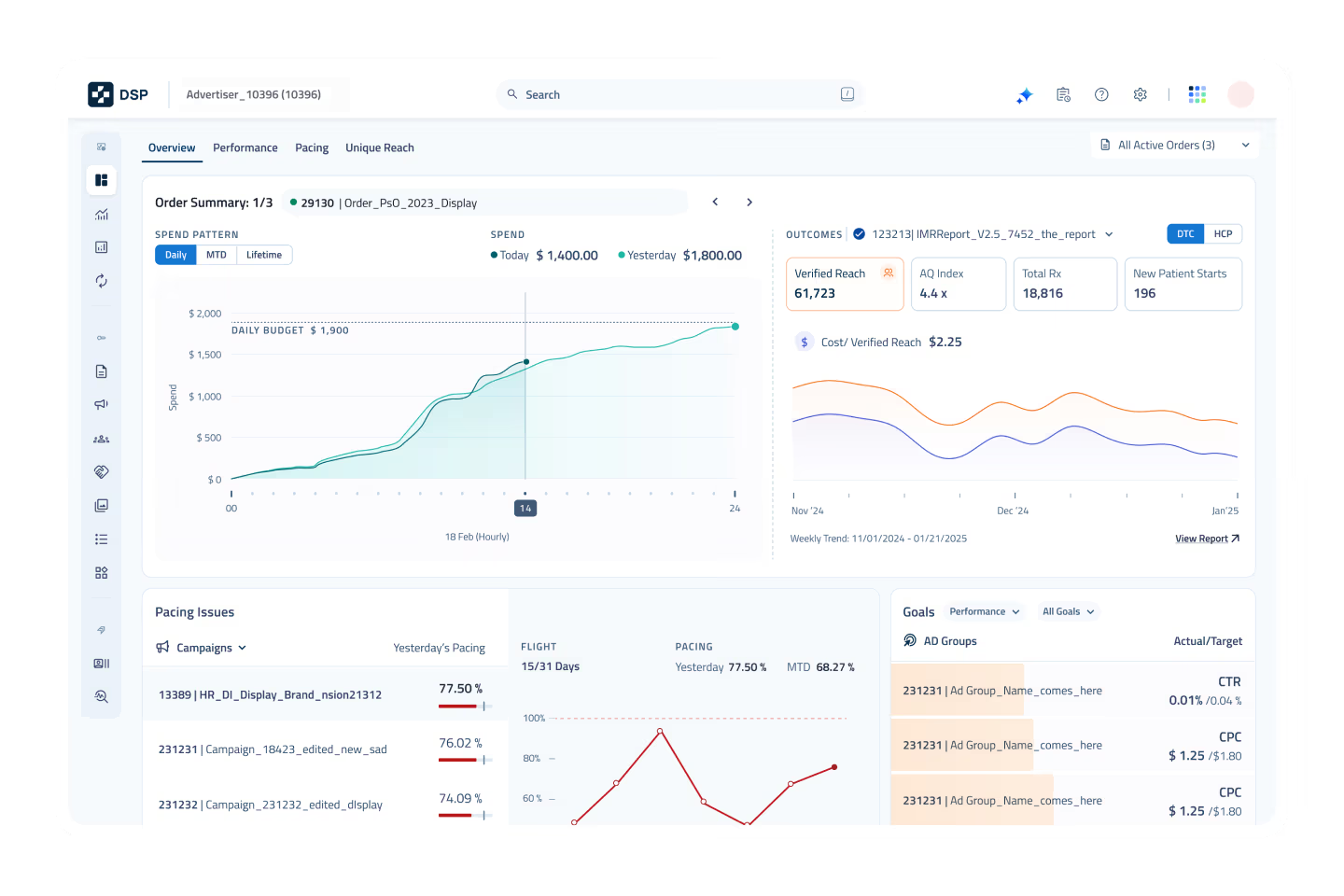
Commitment Manager will address a longer-standing tension: managing upfront TV commitments across multiple brands and deals without a single source of truth. The new UI will let agencies input and monitor PG and PMP deals, track spend throughout the TV season, and surface pacing risks before they become contractual problems. For investment leads managing complex multi-brand portfolios, having this visibility in one place reduces risk and frees up time.
Putting Creative Intent into Practice
Another meaningful addition: Video Creative Weighting. Teams can now assign percentage-based weights to video creatives within an ad group, directing spend toward specific assets rather than relying on rotation. For campaigns running multiple message variants or testing creative strategies, this gives media teams actual control over how budget maps to creative intent.
Across point-of-care, CTV, and creative delivery, these newest DeepIntent Cortex enhancements are about precision, reaching the right people in the right environments and ensuring spend maps to strategy. It's a natural complement to our decisioning improvements—stay tuned to learn more about how the new Cortex also optimizes your workflow and your performance.
Learn how DeepIntent Cortex works to optimize your decisioning.