Pharma brands are active on more channels than ever. Digital display, connected TV, point-of-care, email, social, and rep visits backed by digital reinforcement. The list keeps growing, and most brands can check the box on being present across them.
But presence without connection is just noise.
What separates the multichannel marketing strategies that actually move scripts from those that simply spend budget is how well all their channels work together: sharing data, building on each other's messages, and responding to how HCPs and patients have already engaged. That coordination is harder to achieve than it sounds, and most pharma marketing teams know it. The campaigns get launched, the channels get activated, and somewhere between the media plan and the market, the coherence breaks down.
How does a pharma marketer build a more connected approach? To get a clear sense, it’s helpful to start with what multichannel marketing in pharma actually means, why disconnected execution has real costs, and what a strategy built on shared data and sequenced messaging can do differently.
What Is Multichannel Marketing in Pharma?
Multichannel marketing in pharma means reaching healthcare professionals (HCPs) and patients across more than one channel as part of a deliberate, coordinated strategy. The emphasis on "deliberate" matters.
A genuine multichannel approach treats the channels as parts of a single plan rather than separate efforts running in parallel. There is a shared audience definition informing every channel. There is a message architecture that accounts for where an HCP or patient sits in their journey. There is logic that determines when a second touchpoint reinforces the first versus when it just adds to the noise.
The goal is a connected experience. One that builds familiarity, delivers the right message at the right moment, and makes the most of every touchpoint in the plan.
Multichannel vs. Omnichannel Marketing: What Is the Difference?
The terms are often used interchangeably, but they describe meaningfully different things. Understanding the distinction helps pharma marketers assess where their current strategy sits and where it could go.

If your current approach coordinates channels to some degree but still operates with separate audience pools or channel-level measurement, you are doing multichannel marketing, and that’s a solid foundation. Omnichannel takes it further by making the channels genuinely responsive to one another.
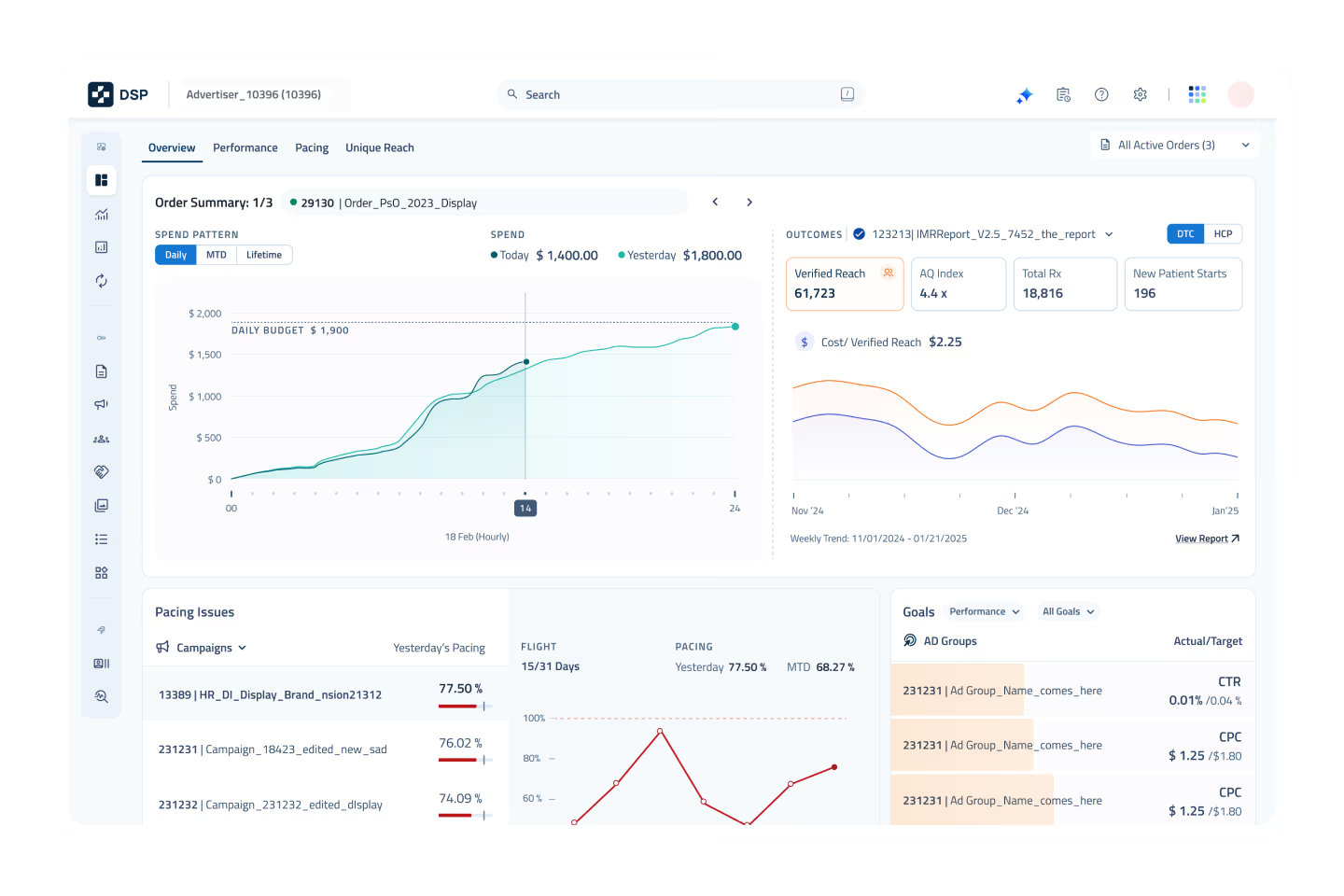
DeepIntent is built as an omnichannel platform for pharma. It connects CTV, display, point-of-care, and other channels through a shared layer of clinical audience data and identity resolution, so campaigns don’t just run in parallel but work together.
Why the Pharma Industry Needs a Multichannel Marketing Approach
The case for multichannel marketing in pharma is a reflection of how HCPs and patients actually move through information, decisions, and the healthcare system today.
HCPs and Patients Are Spread Across More Channels than Ever
Rep access to HCPs has declined sharply over the past decade. More physicians are restricting or refusing in-person visits, and the window for a face-to-face detail has compressed even for those who allow them. That shift pushed more of the HCP engagement journey into digital channels, and digital did not wait around to consolidate. HCPs now move between professional publications, point-of-care platforms, medical education content, digital display, and peer networks as part of their routine.
Patients are spread just as widely. They are searching symptoms, streaming health content on connected TV, scrolling social media, and comparing treatment options across devices, often before they have had a single conversation with a physician. A single-channel strategy cannot cover the breadth of where decisions are actually being made.
No Single Channel Can Carry the Full Prescribing Journey
A prescribing decision does not happen in a single moment on a single channel. Awareness builds in one place; consideration develops in another; and action (the decision to prescribe or ask about a treatment) is triggered somewhere else entirely.
A CTV ad that introduces a mechanism of action builds initial awareness. A point-of-care placement at the moment of prescribing reinforces it when it matters most. Neither works as well in isolation as they do together, because each channel is serving a different job in the journey. Multichannel marketing is how pharma brands show up for all of them.
Patients Are Taking a More Active Role in Treatment Decisions
The days of fully physician-driven prescribing decisions are long gone for many therapeutic categories. Patients research conditions, compare branded and generic options, look up side effect profiles, and arrive at appointments with preferences already formed. The clinical conversation increasingly confirms a direction the patient has already started moving toward.
Multichannel marketing lets pharma brands participate in that self-directed journey. Brands can reach patients during the research phase, the symptom phase, and the "what do I ask my doctor" phase, before the clinical conversation happens and while influence is still possible.
HCPs Expect Consistent Information Wherever They Engage
When an HCP sees a brand message in a medical journal and then receives a conflicting or outdated message through a digital channel, they see that as a credibility problem. HCPs now hold pharma brands' digital touchpoints to the same standard as face-to-face interactions with reps. The information should be accurate, current, and consistent regardless of where the engagement happens.
Inconsistency across channels damages credibility faster than absence from a channel altogether. A brand that shows up on three channels with three different versions of the same message would often be better served running one channel well.
Competition for Both HCP and Patient Attention Is Intensifying
Pharma brands are navigating a two-front attention challenge. Within any given therapeutic area, brands are competing for limited HCP mindshare, a shrinking pool of access time distributed across a growing number of digital touchpoints. Simultaneously, they are competing for patient attention in a media environment that is noisier and more fragmented than at any prior point.
A coordinated multichannel presence is now effectively the baseline for staying visible on both fronts. Brands that still rely on one or two channels to carry the full weight of engagement are, by definition, leaving ground to competitors who are showing up across more of the journey.
Regulatory Complexity Demands a Structured Channel Approach
Every channel in a pharma marketing plan carries its own compliance requirements. Things like FDA guidelines on fair balance and promotional claims, HIPAA requirements for health data handling, and MLR review processes for approving content before it goes live are not uniform across channels, and managing them ad hoc as channels are added creates real risk.
A structured multichannel approach integrates compliance into the strategy from the start rather than retrofitting it. When the platform infrastructure is built for pharma's regulatory environment (e.g., HIPAA-compliant by design, with MLR-ready workflows), adding channels is an expansion of what is already working, not a new compliance problem to solve.
The Cost of Running Disconnected Marketing Campaigns Across Channels
Most pharma marketing teams are aware that their channel coordination is imperfect. Fewer stop to quantify what that costs. These are the most common consequences of running disconnected campaigns:
- Wasted reach and duplicated spend. Without cross-channel frequency management, the same HCP or patient gets overexposed on one channel while going completely untouched on another. That imbalance inflates costs and degrades the experience.
- Inconsistent audience targeting. When each channel runs against its own audience definition, there is no guarantee that the HCP being reached in CTV is the same one being targeted in display. Clinical nuance, the NPI-level accuracy that makes pharma targeting meaningful, gets diluted or lost.
- Incoherent messaging. Campaigns built independently per channel rarely tell a single, progressive story. An HCP may see an awareness-level message in one channel the same week they see a different awareness-level message in another, when what they needed was a consideration message to move them forward.
- Unattributable performance. When channels are disconnected, performance measurement is too. Each channel reports on its own metrics, but no one can say with confidence how the channels interacted: which combination drove the script lift, which touchpoint closed the loop, or where the budget was actually working.
- Missed clinical moments. Point-of-care and condition-related digital moments are time-sensitive. When channels are not coordinated, those moments pass without the reinforcement of surrounding channels that would make them more effective.
- Compliance exposure from fragmented oversight. Disconnected channel management increases the likelihood that content in one channel has not gone through the same review rigor as another, creating regulatory risk that a unified workflow would prevent.
Multichannel Marketing Tactics That Work Well for Pharma Companies
The following multichannel marketing tactics consistently outperform single-channel approaches when executed with the right data infrastructure behind them.
Reach HCPs and Patients Around the Same Clinical Moment
One of the highest-leverage tactics in pharmaceutical multichannel marketing, and one of the most underused, is coordinating HCP and patient targeting around the same condition or treatment decision simultaneously. When an HCP is reached at the moment of prescribing and the patient seeing them has already been exposed to relevant messaging, the two touchpoints compound each other. The patient is more likely to ask, the HCP is more primed to respond, and the clinical conversation shifts.
This kind of coordinated timing requires that HCP and patient audiences be planned together, not in separate campaign workstreams. Most pharma media plans do not do this by default.
Use the Same Audience Data Across Every Channel
When CTV, display, point-of-care, and any other channel in the plan are all grounded in the same verified clinical audience definition, the strategy holds together. The right HCPs are being reached everywhere they are being reached. Performance metrics are comparable. Frequency adds up to something rather than fragmenting into channel-level noise.
Using NPI-matched, clinically verified audience data as the shared foundation across every channel is what turns a media plan into a coordinated strategy. It is also what makes measurement meaningful, because you are measuring the same audience's response across channels, not five different audiences' responses on five different channels.
Manage Frequency Across the Full Plan, Not Per Channel
Most pharma teams have frequency caps at the channel level. Far fewer manage frequency across the full plan. The result is an HCP who has seen a given brand message a dozen times on one channel while remaining completely unexposed on two others, which is a budget problem and a relationship problem simultaneously.
Cross-channel frequency management requires a unified view of impression delivery across the plan. When it is working, budget flows toward the channels where an individual has not yet been reached rather than doubling down on channels where they have already passed the point of diminishing returns.
Sequence Messages by Journey Stage, Not by Channel
Channel selection and message selection are two different decisions, and conflating them produces plans where the CTV campaign always runs awareness messages and the display campaign always runs a promotional offer, not because that is what the journey requires, but because it is how the channels were historically used.
Message sequencing done well means an HCP who was first exposed to a brand through an awareness touchpoint receives a consideration-stage message the next time they are reached, and an action-stage message when they are at the point of care. The channel carries the message. The journey stage determines what that message says. The platform tracks where each HCP is in the sequence and serves accordingly.
Match the Channel to How Each HCP and Patient Prefers to Engage
Not all HCPs respond to the same channels, and not all patients behave the same way across media. Some HCPs are heavy digital engagers who spend significant time on medical education platforms and clinical content sites. Others still respond primarily to rep visits, with digital as reinforcement rather than the primary touchpoint. Patients vary just as widely by age, condition severity, and media habits.
Channel selection should follow verified behavior and preference data rather than assumptions about what a given specialty or demographic prefers. When the data leads channel selection, the plan invests in the combinations that are most likely to actually reach and engage, as opposed to the combinations that are most familiar or easiest to execute.
Which Channels Should Your Multichannel Strategy Include?
The right channel mix depends on your audience, therapeutic area, and campaign objectives. These are the primary channels that belong in a well-constructed pharma multichannel plan:
- Connected TV (CTV). High-impact, unskippable reach at scale for both HCP and patient audiences. Best for building awareness and driving brand recall early in the journey.
- Programmatic display. Flexible, scalable, and effective for sustained reach and retargeting across web and app environments. Works across both HCP and patient audiences when grounded in clinical data.
- Point-of-care (POC). Reaches HCPs at the moment of prescribing in the exam room, at the EHR, or in the waiting room. Among the highest-intent environments in the plan.
- Audio and streaming. Increasingly viable for patient audiences in particular, as podcast and streaming audio consumption continues to grow among health-engaged consumers.
- Social and professional networks. LinkedIn and medical professional communities for HCP engagement. Facebook, Instagram, and condition-specific communities for patient audiences.
- Email and direct digital. Effective for HCPs when content is relevant, well-timed, and not overused. Best deployed as a sequencing tool alongside other channels rather than a standalone.
- Search. Critical for patient audiences actively researching conditions and treatments. Captures intent at the moment it is expressed.
How a Purpose-Built Platform Makes Multichannel Marketing Work in Pharma
Coordinated HCP and patient targeting, shared audience data, cross-channel frequency management, sequenced messaging: all of this is theoretically achievable through a combination of point solutions and manual coordination. In practice, however, that combination does not hold together under the operational demands of a real- pharma campaign.
What a purpose-built platform like DeepIntent makes possible is the infrastructure that connects all of it.
Clinical audience data serves as the shared foundation across every channel. Not a lookalike model, not a demographic proxy, but verified, NPI-matched data that makes targeting consistent from CTV to display to point-of-care.
Identity resolution keeps that targeting coherent as HCPs and patients move across devices and environments. Real-time cross-channel measurement ties performance back to the outcomes that matter in pharma, like script lift, audience quality, and reach against verified clinical segments. And HIPAA-compliant infrastructure means all of this operates within pharma's regulatory reality, not around it.
The result is a multichannel strategy that’s coordinated, measurable, and built to drive outcomes rather than just activity.
If you’re ready to see what connected multichannel marketing looks like in practice, request a demo.