Creativity is abundant inside today’s agencies, but scalable infrastructure determines how far those ideas can actually go.
In healthcare marketing especially, breakthrough ideas rarely stall at the whiteboard. Rather, they stall when teams attempt to operationalize them across fragmented datasets, disconnected systems, and compliance-heavy environments. In this landscape, data is the connective tissue. When it’s fragmented or inaccessible, even the strongest strategy struggles to scale.
Three shifts are redefining how healthcare data must be prepared, analyzed, and activated, and marketers must understand them to keep pace.
#1: The Foundation is Shifting from Data Access to Data Readiness
Healthcare data is inherently complex. It is expensive to license, difficult to standardize, and typically dispersed across multiple partners and platforms. Claims data, media exposure data, CRM records, and outcomes signals often exist in separate ecosystems, each with its own schema and governance requirements.
Before a single insight is generated, that data must be cleaned, de-identified, normalized, and structured. That preparation requires time, technical expertise, and significant financial investment. For many independent agencies, these prerequisites create friction that slows innovation and limits competitiveness.
Emerging healthcare-focused platforms are addressing this challenge by embedding prepared datasets directly into their infrastructure. Instead of forcing teams to stitch together multiple vendors, contracts, and transformation workflows, these environments provide data that is already formatted, governed, and ready to join. When data can be seamlessly connected across sources, strategy teams spend less time wrangling files and more time building differentiated solutions.
Just as important, agencies shouldn’t be expected to operate like technology companies in order to deliver sophisticated data solutions. Their expertise lies in strategy, creativity, and client partnership. When the infrastructure and datasets are managed by specialized platforms, agency teams are free to focus on developing insights and delivering innovative solutions for their brands.
#2: Healthcare Marketing is Moving Toward Vertical-Specific Data Infrastructure
Advanced analytics, forecasting models, and AI-driven optimization depend on clean, structured inputs and secure technical environments. Machine learning models cannot compensate for inconsistent taxonomies or gaps in the data. Innovation requires a foundation where data is harmonized from day one.
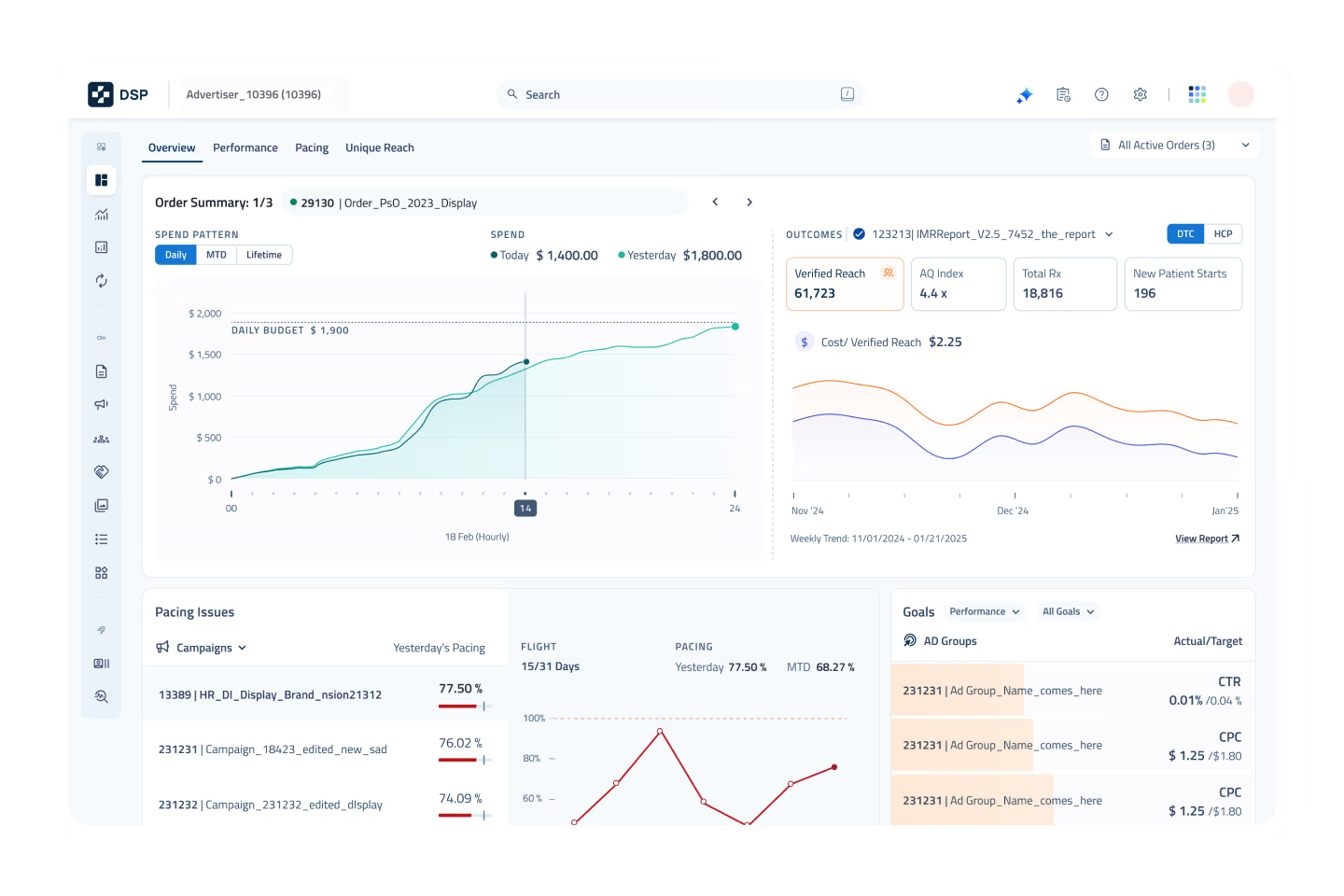
A healthcare-specific platform should include built-in analytic queries, standardized measurement frameworks, and identity resolution layers that connect audience definitions to activation channels. This allows users to move from audience hypothesis to insight generation quickly, without building custom pipelines each time.
Prepared data also accelerates experimentation. Teams can test new segmentation strategies, evaluate affinity insights, and analyze performance against real-world outcomes within environments designed for healthcare use cases. With the right infrastructure in place, analytics becomes a growth engine rather than a bottleneck.
#3: Healthcare Demands Vertical-Specific Infrastructure
Generic cloud infrastructure offers scale, but healthcare marketing carries distinct requirements. Complex HCP definitions, rare disease cohorts, treatment pathways, and outcomes measurement demand a vertical-specific taxonomy. Privacy-safe collaboration is equally essential, with HIPAA-compliant processes governing how data is joined, analyzed, and activated.
Platforms built for healthcare incorporate identity graphs designed to connect clinical and media signals while maintaining compliance. They enable secure data collaboration through clean room frameworks and governed access controls. These capabilities allow agencies and brands to analyze and orchestrate data across partners without exposing sensitive information.
Just as important, modern platforms must integrate into existing agency workflows. Independent agencies operate under tight timelines and resource constraints. Infrastructure that arrives with prepared datasets, embedded analytics tools, and built-in activation pathways reduces the lift required to deliver sophisticated solutions. Out-of-the-box tools and premium healthcare datasets enable agencies to build differentiated offerings faster, strengthening their position in competitive pitches and long-term partnerships.
Infrastructure has become a strategic advantage in healthcare marketing. When data is included, structured, and privacy-safe by design, agencies and brands can focus on insight, performance, and measurable patient impact. The organizations that invest in this foundation gain the ability to innovate consistently, respond to market shifts quickly, and translate strategy into action with greater speed and confidence.
Agencies and brands that adapt to these three shifts will be better equipped to turn healthcare data infrastructure into a lasting competitive advantage.
Curious to learn more about what privacy-safe healthcare data collaboration actually enables for marketers? Click here.