Point-of-care media crossed $1 billion in spend in 2024, and the channel is finally getting the programmatic infrastructure it's always deserved. At the center of that shift is Lane4.io, the first SSP built from the ground up for EHR and health media advertising. As part of our new partnership, we asked CEO and Founder Chad Gottfrid to share his perspective on what's broken in the market, how Lane4.io is fixing it, and what pharma brands should be thinking about right now.
Question #1
Lane4.io is often described as the first SSP purpose-built for EHR advertising. What does "purpose-built" really mean in practice and why does it matter?
Honestly, the simplest way to explain it is to look at how the other platforms got here. The ones that serve advertising inside EHR workflows today were never designed for that job. They were built for clinical documentation, patient engagement, billing. Advertising came later, as a revenue experiment, bolted on after the fact. That legacy shows up everywhere: clunky ad delivery, limited targeting logic, no real compliance architecture, data that was never structured with marketing activation in mind.
Lane4.io was different from the first line of code. Every design decision — how we ingest EHR data, how we de-identify at the edge, how we structure clinical event signals — was made with programmatic marketing activation as the end goal. That means pharma brands get cleaner inventory, faster signal, and a compliance architecture that was designed in, not patched in. It's the difference between a platform that can do advertising and one that was built to do it well.
We didn't retrofit a clinical tool. We built an ad platform that happens to live where clinical decisions get made.
Question #2
There's no shortage of ways to reach HCPs today. What problem does point-of-care advertising solve that other channels simply can't?
Reach isn’t really the problem. Most brands have that covered. You can serve an HCP an impression on a general web publisher, inside a medical journal app, or through a rep visit. All of that has value. But none of those channels can tell you that a physician just pulled up a chart for a patient who matches your target clinical profile and is actively working through a treatment decision. That's what the EHR workflow gives you.
The way I think about it: other channels reach the prescriber between decisions. We reach them inside the decision.
Question #3
How does Lane4.io work alongside EHR platforms that have their own direct sales relationships with pharma? Are you competing with them, or complementing them?
It's the right question, and honestly one I come back to a lot. The short answer is that we're infrastructure, not competition.
EHR platforms have spent years building direct IO relationships with pharma, and those relationships have real value, including custom placements, white-glove service, and tailored clinical messaging that requires a human sales motion. We have no interest in disrupting any of that. What Lane4.io opens up is a programmatic lane that didn't exist before. Brands that want to buy EHR inventory at scale, through their existing DSP relationships, measured alongside their broader omnichannel campaigns, had no good path to do that.
When we sit down with EHR platforms, they get it pretty quickly: we're bringing incremental demand, not competing for the direct deals they already control. They keep full authority over which therapeutic categories run on their inventory, how placements are structured, what the experience looks like for their clinician users. We're just opening a door that was previously closed.
Question #4
What drew you to partnering with DeepIntent specifically, and what does this partnership unlock for pharma marketers that wasn't possible before?
It was a pretty natural fit when we started talking. We had built the supply side — publisher relationships, compliance architecture, NPI-level clinical event signals. DeepIntent had built the demand side — identity resolution, audience quality measurement, script lift attribution. Each side was genuinely missing what the other had.
What the partnership unlocks is a closed loop that hasn't been available programmatically at scale before. A pharma brand can now say: I want to reach this endocrinologist in Phoenix at the moment she's seeing a patient who fits my target profile — and then measure whether she actually wrote the script. The clinical moment connects directly to the real-world outcome.
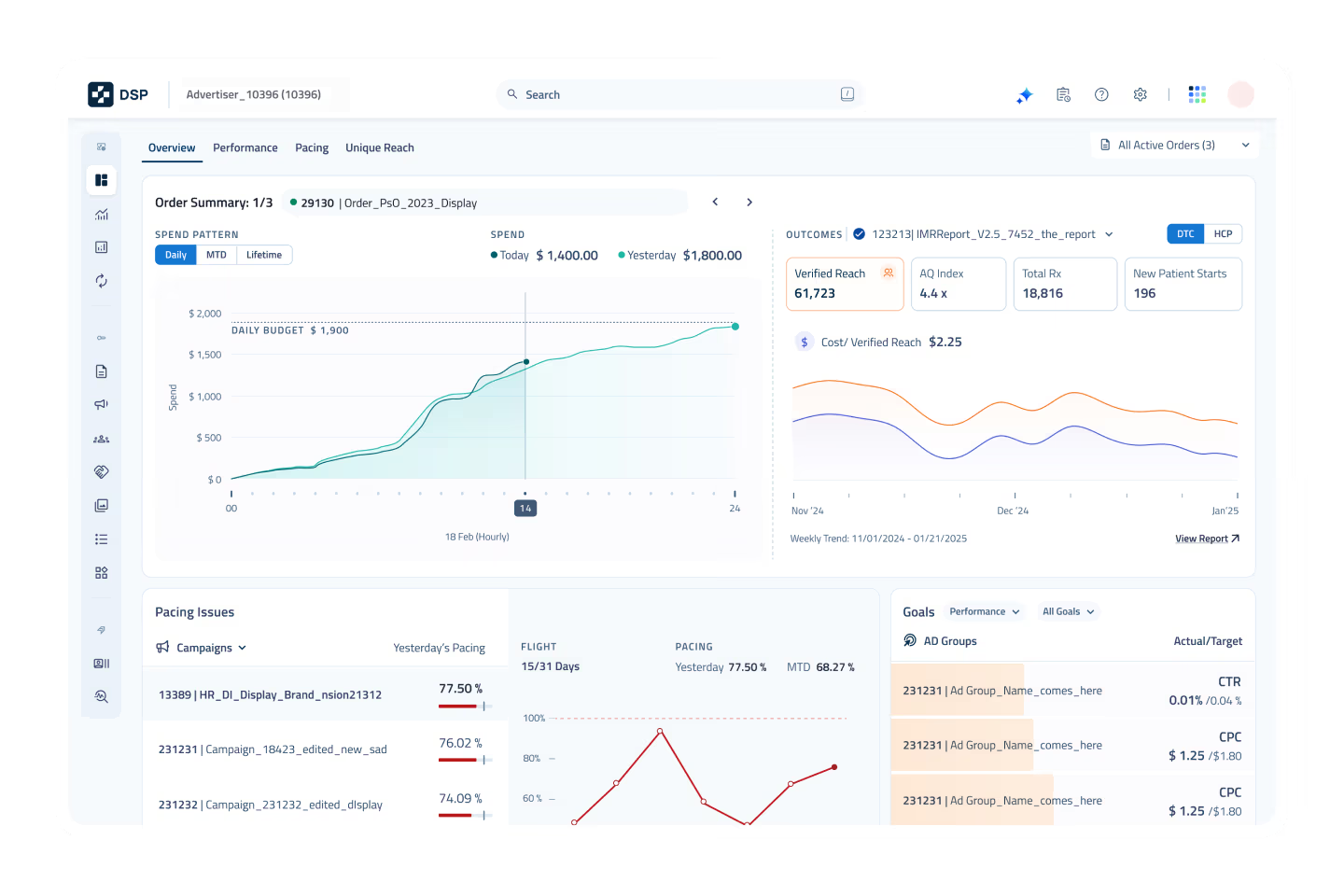
The practical unlock for marketers is simpler: point-of-care inventory in an omnichannel programmatic plan, without a separate direct IO negotiation. Same DSP workflow, same audiences, same measurement rigor they already expect from DeepIntent. A lot of the friction that's kept brands from investing more aggressively in the channel just goes away.
Question #5
Where do you see point-of-care advertising heading over the next few years, and what should pharma brands be doing now to get ahead of it?
The channel has crossed a threshold. A billion dollars in annual spend means this is a core channel, no longer an experimental budget line. But the infrastructure hasn't caught up to the investment. Most brands are still buying POC inventory through fragmented direct relationships, without the programmatic plumbing to measure and optimize it the way they would any other channel. That gap is going to close, and faster than people expect.
The bigger shift I see coming is that clinical event data will become a central input not just for EHR advertising, but for how pharma marketers plan and measure campaigns across the full media mix. The signal coming out of the prescribing workflow—de-identified, NPI-level, real-time—is more precise than almost anything else available in healthcare marketing. We're building toward a world where that data informs omnichannel strategy as opposed to just in-workflow placement.
My advice to brands is pretty simple: don't wait for the market to mature around you. Get your programmatic infrastructure connected to point-of-care inventory now. Understand what NPI-level trigger-based messaging can do for your HCP strategy. Start building the measurement framework to prove it works. The brands running those experiments today will have a real head start when this scales, and it will scale.
Learn more about EHR advertising here.