Pharmaceutical R&D has never been more precise. We can define a patient population by genotype, design a therapy against a specific molecular target, and identify the people it will help before they ever walk into a doctor’s office. Yet somewhere between half and two-thirds of drug launches fail to meet their pre-launch forecasts. Looking across launches over a fifteen-year window, analysts found that roughly half missed estimates by more than 20%.
These are drugs that worked; they cleared every bar the science set for them. But they failed to reach the patients the forecast assumed they would.
When a launch underperforms, the postmortem tends to focus on things like the competitive set and how it perhaps moved faster than expected. What almost never comes under review is the intelligence that shaped the plan in the first place, the assumptions about who prescribes and where attention was worth buying.
A clinical trial enrolls patients against dozens of inclusion criteria, tracks them longitudinally, and treats every deviation as a finding. But the commercial plan that follows that trial merely targets, say, "endocrinologists." Same molecule, same company, but entirely different standards of evidence.
Two gaps account for most of the loss.
The first is speed. Commercial intelligence usually arrives after the decision it was meant to inform. A brand team asks a question, the request enters an analytics queue, and the answer comes back three weeks later, by which point the budget is allocated and the campaign is in flight. Due to the lack of speed with which it arrives, an insight sometimes influences almost nothing at all.
The second is verifiability, and it is getting worse quickly. Hundreds of millions of pharma marketing dollars have been committed to advertising technology that reasons over general-purpose data. Those models have no view of prescribing behavior, no resolved identity for a physician, and no real-world claims data. They will still produce an answer, delivered fluently, with no relevant data behind it. In an industry where a targeting decision determines which patients hear about a therapy, being confidently wrong at scale is an even worse mode of failure than being slow.
The keys to commercial precision in healthcare
A few things define commercial precision. The underlying intelligence has to be grounded in verified health data rather than inferred signals, because any model is only as good as the data it reasons over. It has to move fast enough to reach the decision while the decision is still open. And it has to be auditable, carrying its reasoning and its lineage with it, so a brand team can always explain why.
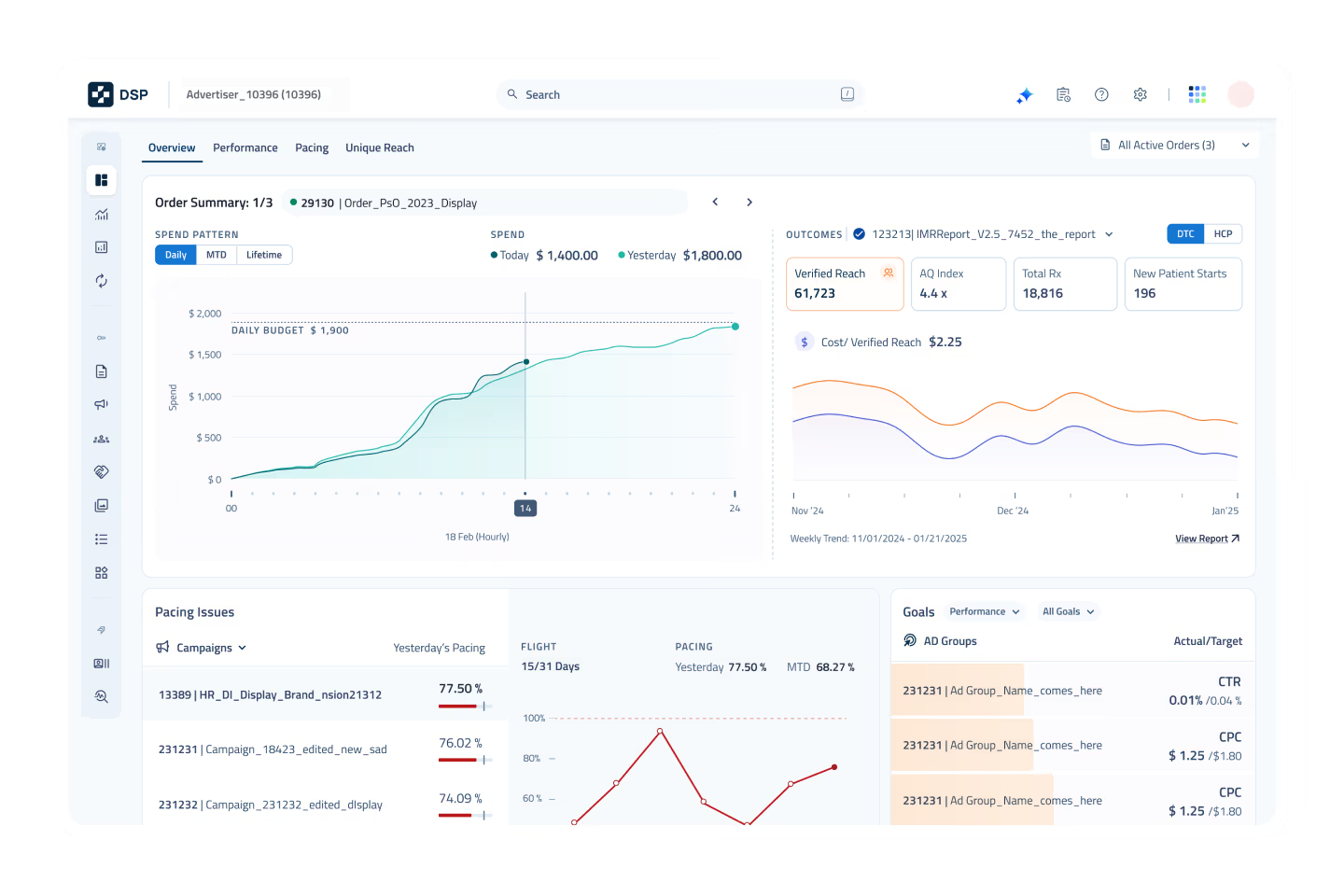
None of this is a technology problem anymore. Infrastructure built for healthcare from the ground up holds these standards by design. When a system's inputs include verified claims and resolved provider identity, everything it produces is grounded in real prescribing behavior. When the query runs against that data directly, the answer arrives in minutes, while the decision is still open. And when every output carries the records it drew from, a brand team can defend any recommendation to their client. What separates this from general-purpose AI is what the model is standing on.
Every commercial decision made on thin evidence is a decision about which patients ever learn that a drug exists that could change their lives. The evidence standards that transformed discovery and clinical development stop at the point where the drug meets the market. With purpose-built healthcare advertising technology, that boundary is finally moving.