Healthcare and pharma digital ad spend is forecast to reach $26.2 billion in 2026, with digital set to represent 82% of all healthcare ad budgets by 2027. For brand managers, agency leads, and pharma marketers, that scale demands a clear view of where the industry is heading. This article covers the trends reshaping how healthcare brands reach patients and providers, and what each one means for your strategy.
1. Linear TV Has Lost Ground, and CTV Has Filled the Gap
Linear's share of healthcare ad spending is falling to 12% by 2027. In its place, 58% of pharma marketers plan to increase CTV spend. The shift is happening because programmatic CTV offers what linear never could: precise audience targeting, real-time optimization, and measurable reach at the household level. Automatic content recognition (ACR) data extends that measurement further, giving marketers parity across linear and connected TV environments so spend decisions are based on actual reach rather than estimated ratings.
2. AI Is Reshaping How Healthcare Marketers Target and Optimize
AI's role in healthcare marketing has moved well past content generation. The more consequential application is in audience prediction and real-time campaign optimization. Clinically grounded audience building uses AI to surface patterns in claims, pharmacy, and condition data that demographic targeting would miss entirely. In healthcare specifically, agentic AI works best as a decision-support layer. The regulatory and clinical complexity of the space means human review remains essential; AI accelerates and sharpens the decisions, but doesn't replace them.
3. Privacy Compliance Is Not Optional
HIPAA, more than 22 state privacy laws, cookie deprecation, and FDA enforcement on DTC campaigns have collectively raised the floor for what responsible healthcare marketing requires. The good news is that privacy-first infrastructure is also a performance advantage. Privacy-safe tracking removes bot and spam data from the signal stream, improving lead-quality data by up to 30%. Brands that build compliance into their data and platform architecture from the start are better positioned on both dimensions: cleaner data and reduced regulatory exposure.
4. Clinical Data Is Becoming the Foundation of Every Campaign Decision
Campaigns built from verified claims, pharmacy records, and condition codes perform differently than those built from demographic proxies. When the audience foundation reflects actual clinical behavior, every downstream decision sharpens: which channels to prioritize, which creative messages to serve, which HCPs or patient segments to reach. The results bear this out. Clinically targeted campaigns see 20 to 50% higher conversion rates than demographically targeted ones. The audience isn't just a starting point; it determines the ceiling of what a campaign can achieve.
5. Provider and Patient Campaigns Are Converging Around the Clinical Moment
Siloed execution, running provider and patient campaigns independently, leaves significant performance on the table. Coordinating HCP and patient outreach around the same clinical window drives meaningfully better outcomes than either campaign would achieve alone. EHR advertising is the channel that makes this coordination most precise: it places messaging inside the clinical workflow at the exact moment a treatment decision is being made. Campaigns that activate at this moment have been linked to 1.5x TRx growth, a result that reflects the power of timing over volume.
6. Omnichannel Is About Being Connected, Not Just Everywhere
The distinction between omnichannel and multichannel comes down to infrastructure. Multichannel means running campaigns across CTV, display, point-of-care, and social. Omnichannel means running those channels from a shared data foundation with consistent identity resolution and coordinated message logic. Without that connective layer, HCPs receive inconsistent messaging, patient journeys break between touchpoints, and frequency caps fail across channels. The cost shows up in wasted impressions and degraded brand perception.
7. The Measurement Standard Is Moving From Media Metrics to Clinical Outcomes
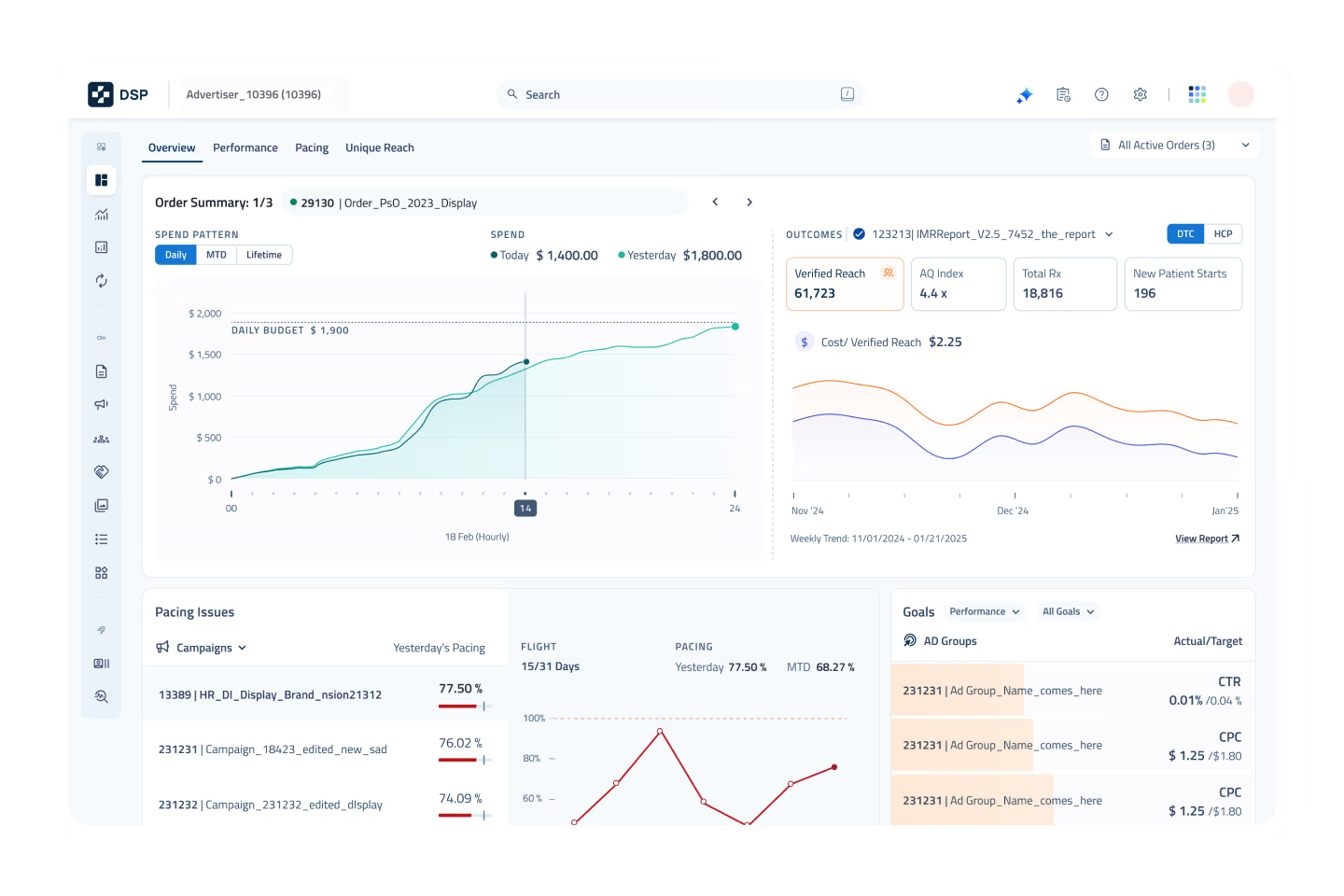
Clicks and impressions don't hold up in a budget review conversation. Healthcare marketing teams are increasingly expected to tie spend to outcomes that leadership and finance recognize: script lift, verified patient reach, HCP engagement with clinical intent. Outcomes-based measurement means defining audience quality scores and script lift targets before launch, then tracking them with daily-refreshed clinical data throughout the campaign. That cadence makes in-flight optimization possible and gives marketers the evidence base they need to defend and grow their budgets.
8. Short-Form Video and Provider-Led Content Are Winning Attention
Vertical video is the fastest-growing content format in healthcare marketing. Nearly half of Gen Z and more than a third of Millennials now use TikTok and Instagram as primary tools for health research. For providers and health systems, this represents a genuine opportunity to build trust with patients in the channels where they are already looking for answers. The content formats that perform are short, specific, and fronted by credible voices. Production polish matters less than clinical relevance and authenticity.
9. The Budget Migration From Traditional to Digital Is Now Structural
Social media ad spend has surpassed linear TV in healthcare for the first time. That milestone signals something larger: the shift from traditional to digital healthcare advertising is no longer a gradual reallocation. It is a structural change in where every marketing dollar goes. Brands still heavily weighted toward traditional channels are operating from a budget architecture that no longer reflects how patients and providers consume information.
What These Trends Mean for Your Marketing Strategy
Across all nine trends, three pillars keep surfacing: verified clinical data, connected execution, and outcomes-based measurement. Brands that have those three things working together are separating themselves from those that don't. DeepIntent is built around exactly this combination, giving healthcare marketers the clinical data foundation, cross-channel infrastructure, and real-time measurement they need to perform in 2026 and beyond. To see how it works in practice, book a demo.