Connected TV (CTV) is one of today’s fastest-growing advertising channels. eMarketer forecasts U.S. CTV ad spending will grow 14.5% in 2026 to reach $37.95 billion, and this is the first year CTV upfront spending is expected to surpass primetime linear TV. Viewers are leading the way: streaming accounted for 48.6% of all U.S. TV viewing in May 2026, well ahead of broadcast and cable combined. As audiences keep moving, more marketers are following them and shifting their dollars to CTV.
While pharma marketers have traditionally prioritized linear TV, there are now more opportunities than ever to reach healthcare audiences across channels and devices. And thanks to advances in advertising technology, these audiences can be targeted with precision in a privacy-safe, HIPAA-compliant way.
CTV is quickly becoming a must-have in pharma media plans. That doesn’t mean you have to put all of your eggs in one TV advertising basket. Below, we cover the basics of how programmatic CTV works, five tips to guide your first CTV programmatic advertising campaign, and the trends shaping where the channel goes next.
The Basics: How Programmatic CTV Advertising Works
CTV refers to streaming content watched on a television through an internet connection, whether that’s a smart TV, a streaming device like a Roku or Fire TV Stick, or a game console. Programmatic CTV is the automated buying and selling of ad space within that content. Instead of negotiating every placement with a network and committing to fixed time slots, advertisers use software to buy individual impressions based on who is watching.
Here’s what happens behind the scenes. When a viewer reaches an ad break in a streaming app, the publisher’s supply-side platform (SSP) sends a bid request describing the available impression, including the app, the content, and permitted household signals. A demand-side platform (DSP) evaluates that impression on the advertiser’s behalf, decides whether it matches the target audience, and places a bid. The winning ad is served within milliseconds, often as a pre-roll or mid-roll spot.
Programmatic CTV inventory is typically bought through one of these deal types:
- Open exchange: Real-time auctions open to any buyer. It offers the broadest scale, with less control over where ads appear.
- Private marketplace (PMP): Invitation-only auctions where publishers offer curated inventory to selected buyers at negotiated floor prices.
- Programmatic guaranteed (PG): Reserved inventory at a fixed price, bought through a DSP. PG works much like a traditional TV buy and is increasingly used to fulfill upfront commitments.
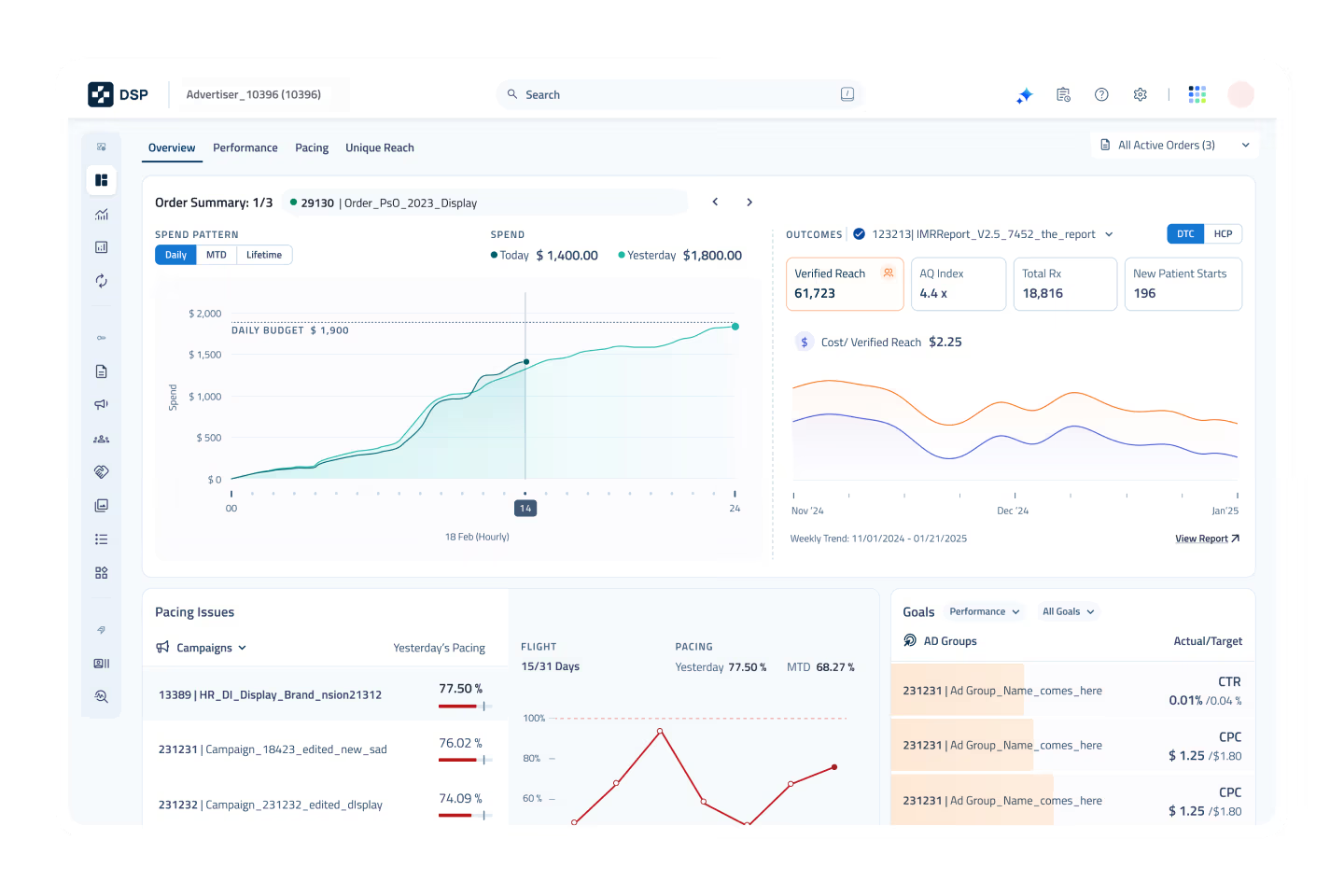
For healthcare marketers, the DSP matters as much as the deal type. A healthcare DSP can build patient and HCP audiences from de-identified clinical data, apply HIPAA-compliant privacy controls, and measure results against pharma outcomes like audience quality and script lift. A generalist DSP was never designed to handle that data.
5 Tips That Will Make You a Better Programmatic CTV Advertiser
Programmatic CTV gives pharma marketers the reach and storytelling of TV with the targeting and measurement of digital. But first-time buyers face real choices: how much budget to move, which inventory to trust, how to measure results, and which partner to work with. The tips below address each of those decisions, starting with how to make the shift from linear without giving up what already works.
1. Plan to Make a Gradual Shift to CTV
Traditional TV has dominated the advertising world for decades, and for good reason. Video is one of the most effective ways to tell a brand’s story. But as CTV gains a larger share of total viewing time and healthcare audiences engage with video content across channels and devices, strategies need to evolve to reach them.
Linear TV can still play a big role, but consider shifting part of your budget to programmatic CTV. A study from FreeWheel and Comcast Advertising found that 57% of reach achieved from streaming was incremental to linear TV buys, and that reach is highest when 10-40% of the media spend is allocated to streaming. So even if you’re starting small, you can still see a significant impact.
2. Activate Your Campaign in Premium, Brand-Safe Content
With so many players in the streaming space, not all video advertising is created equal. When building your programmatic CTV strategy, make sure your campaign runs in premium, brand-safe content on the ad-supported platforms your target audience is most likely to watch.
Privacy is a top concern in an industry as highly regulated as healthcare, so pharma marketers should seek out a CTV advertising solution that goes beyond HIPAA compliance. They must reach audiences with precision while ensuring individuals can never be re-identified through their health data.
3. Measure Your Reach With Different Types of Data
Advertising on CTV gives you the benefits of traditional TV plus the added benefits of digital, particularly when it comes to measurement. While the industry is still working toward a standard method for CTV measurement, several technologies can provide the insights you need to understand how your campaigns are performing.
By leveraging automatic content recognition (ACR) data, for example, you can more accurately determine whether your ads are being run and seen on certain devices. This data can then be combined with other metrics to assess the overall reach and frequency of your CTV campaign, including how much of your audience you’re reaching that linear TV missed.
4. Optimize Based on the Metrics That Matter Most
With the rise of machine learning and AI in advertising, one of the main advantages of a programmatic CTV campaign is the ability to optimize automatically based on how the ads are performing. For pharma marketers looking to connect campaign performance to real-world business outcomes, focusing on metrics like unique reach, audience quality, and script performance paints a clear picture of a campaign’s overall impact.
At DeepIntent, we conducted a campaign analysis comparing the effectiveness of advertising on CTV to linear TV. Leveraging campaign data, ACR data, and our patented outcomes measurement technology, we found that CTV delivers 82% higher on-target reach and 50% higher audience quality compared to linear.
5. Choose the Right Programmatic CTV Partner
Making the shift to CTV advertising can seem daunting, especially given how large a role traditional TV has played in pharma advertising. If you’re unsure where to begin, or how to reach your most relevant healthcare audience with CTV, choosing the right partner and platform can make all the difference.
Look for a partner who can help you eliminate overlap and manage frequency among the fragmented audiences watching both linear and CTV. By selecting a health DSP to plan, activate, and measure your CTV campaigns, you can feel confident about reaching precise healthcare provider and patient audiences in a HIPAA-compliant manner.
Thinking about making the shift from linear TV to CTV advertising? Read Linear TV vs CTV Advertising: Key Considerations for Healthcare Marketers.
Trends Shaping the Future of Programmatic CTV Advertising
Programmatic CTV is maturing quickly, and the changes underway affect healthcare marketers in specific ways. Here are the trends worth watching as you build your CTV strategy.
- Upfronts are going programmatic. Pharma brands increasingly use PG and PMP deals to fulfill upfront commitments, combining guaranteed access to premium inventory with health data targeting and outcomes measurement. More than 65% of programmatic CTV money is now allocated during upfront season, so planning ahead and tracking delivery against those commitments matters more every year.
- Outcomes are becoming the standard for measurement. After years of rapid growth, marketers want proof that CTV is delivering. eMarketer expects 2026 to be the year measurement discipline takes center stage, with buyers demanding consistent definitions of reach, quality, and lift. In healthcare, that means judging CTV on audience quality, new patient starts, and script lift rather than completed views.
- AI is moving from bidding into planning. Machine learning already sets bids and paces budgets. Now AI is moving upstream to help analyze markets, size audiences, and recommend media plans through conversational, agentic workflows. In a regulated category, the strongest approaches keep people in the loop to approve consequential decisions.
- Privacy laws are raising the bar for health data. A growing number of states regulate consumer health data separately from other personal information, and sensitive data is taking center stage in new state privacy legislation. Programmatic CTV for pharma will increasingly depend on de-identified, privacy-safe audiences and partners who can demonstrate compliance across every state.
- CTV is becoming an HCP channel. Physicians stream TV like everyone else, and HCP identity graphs now make it possible to reach them on the big screen. When Kinesso added CTV to an infectious disease HCP campaign, physicians exposed to CTV were 4.5X more likely to prescribe, driving 1.9 million additional prescriptions over a year.
- Curated, transparent inventory is gaining ground. With the FDA increasing its scrutiny of DTC drug advertising, pharma brands want to know exactly where every impression runs. Curated healthcare inventory packages, including FAST channels and live sports, give buyers more control over context, brand safety, and supply paths than open exchange buying alone.
Final Thoughts
Programmatic CTV has moved past the experimental stage for pharma. Viewers are already streaming, budgets are following, and the tools for targeting, measuring, and buying CTV are built for the precision healthcare demands. First-time advertisers who start with a gradual shift, insist on premium inventory and outcomes-based measurement, and choose a partner built for healthcare will be ready for where the channel is heading.
Ready to get started? Explore DeepIntent’s CTV advertising capabilities to see how health-intelligent CTV can support your next campaign.