Pharma digital marketing budgets are growing. Impact, in many cases, is not. More spend is moving into programmatic, paid search, and connected TV, yet too many campaigns close out the year without a clear line between ad exposure and business outcomes. If you're accountable for pharma marketing performance, that gap is a familiar problem.
This article covers why many pharma digital campaigns consistently underdeliver, what a strategy built for real ROI looks like, and which practices separate brands that improve year over year from those running the same underperforming playbook.
Why Most Pharma Digital Marketing Budgets Underperform
The channels and creative are usually well selected, but the execution layer underneath can be problematic: who you're reaching, how you're measuring the campaign, how your channels communicate with one another, and when compliance enters the picture.
Reaching the Wrong Audiences at Scale
Most digital advertising relies on demographic and behavioral proxies. In pharma, those proxies compound into a serious efficiency problem. A campaign for a specialty medication might reach millions of impressions, but if a significant share go to people outside the condition, outside the relevant prescribing relationship, or outside the treatment decision window, the waste adds up fast. Clinical data fixes this at the source. Audiences built from diagnosis codes, prescribing patterns, and patient journeys are matched to your message before a single dollar goes live.
Optimizing for the Wrong Metrics
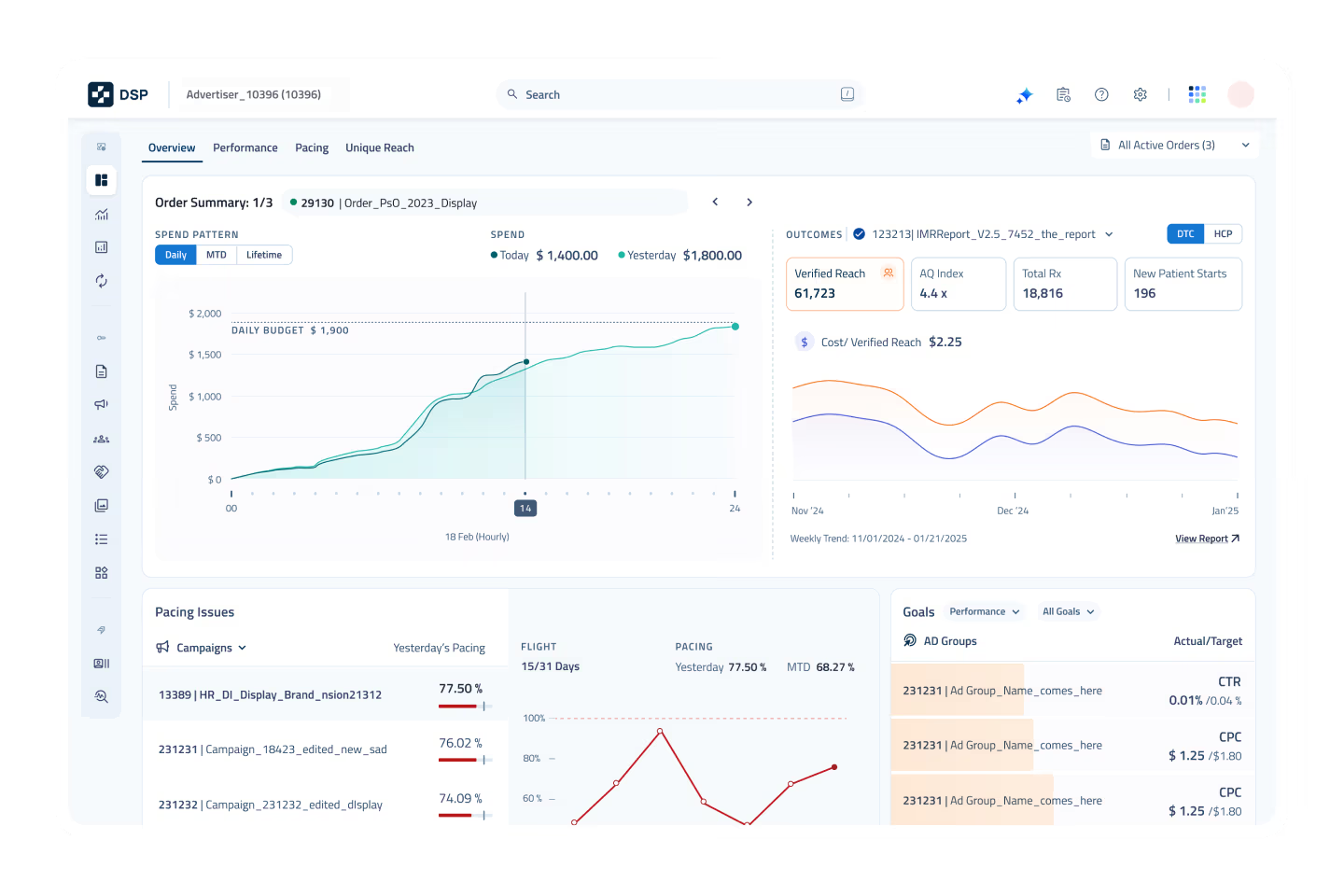
Click-through rate and viewability were built for direct response. They measure whether an ad was seen and whether someone clicked, not whether a prescribing decision was influenced. A campaign can hit every benchmark on the dashboard and still do nothing for the brand. The KPIs that reflect pharma performance look different: audience quality scores, reach among verified HCP or patient segments, and ultimately script lift or new patient starts.
Running in Silos Instead of Omnichannel
Most pharma organizations run HCP and patient campaigns from separate teams with separate media plans. The result is messaging that doesn't reinforce itself. A patient might see a DTC ad on connected TV, then visit a doctor who hasn't been reached by a coordinated HCP campaign in the same window. The prescribing conversation happens without the clinical context that would have made it more productive. Omnichannel pharma marketing connects those touchpoints deliberately.
Ignoring Compliance Until It's Too Late
When MLR review is treated as a final gate rather than an ongoing process, it becomes a budget problem. Copy that goes through multiple revision rounds after launch was supposed to go live means delayed activation and campaigns that miss their intended audience window. The brands that manage compliance well treat it as a foundational input, not a downstream check, with regulatory and legal in the room when campaign strategy is being set.
Building a Pharma Digital Marketing Strategy for Better ROI
The decisions made before a campaign goes live determine far more than the tactics used after launch.
Start With Clinically Grounded Audience Strategy
The most consequential decision in pharma digital marketing is who you're trying to reach. Building that answer from clinical data means grounding HCP targeting in prescribing behavior and specialty, and building patient audiences from verified diagnosis and treatment patterns. It also means understanding where in the treatment journey a given segment sits, because a newly diagnosed patient needs different messaging than one who has been on a competitor therapy for two years.
Align Your HCP and Patient Messaging as One Coordinated Campaign
Prescribing decisions happen at the intersection of HCP confidence and patient advocacy. A coordinated campaign aligns the timing of HCP and patient media so the physician is reached in the same window the patient is being activated. It ensures brand messaging is consistent across both audiences, so the conversation in the exam room doesn't start from scratch. And it measures the programs together, because the outcome requires both sides.
Activate Across Channels Without Losing Coherence
Running ads on multiple channels is not the same as running an integrated campaign. Real integration requires consistent identity resolution across channels so you know you're reaching the same HCP or patient across programmatic display, CTV, audio, and search. It requires coordinated message sequencing so that ad exposure advances a narrative rather than repeating one. And it requires frequency management across the full channel mix, not just within individual placements.
Track the Right KPIs
KPI selection is a strategic decision that shapes how campaigns are optimized in flight and how they're evaluated at year end. Picking the wrong metrics drives bad optimization decisions in real time.
Optimize in Real Time Toward Clinical Outcomes
When live signals, including audience quality metrics and early prescription indicators, flow back during a campaign, media can be reallocated while there's still budget to reallocate. Underperforming placements get cut. High-performing segments get scaled. The campaign that ends should be meaningfully better than the one that launched.
Prioritize Privacy Without Sacrificing Performance
Tightening HIPAA scrutiny has made privacy infrastructure a campaign priority. Privacy-safe targeting, built on first-party data, consented health data partnerships, and contextual signals, is a durable performance advantage for pharma marketers who get ahead of the transition. Brands that build on compliant infrastructure now will maintain campaign continuity while competitors scramble to rebuild.
HCP Marketing vs. DTC Marketing: Why the Difference Matters
HCP and DTC campaigns are fundamentally different programs, and treating them as variations on the same playbook is one of the more costly mistakes in pharma digital marketing.
The audiences differ in ways that go beyond demographics. HCPs are evaluating clinical evidence, mechanism of action, safety profiles, and how a therapy fits their patient population. Patients are navigating a condition, often for the first time, trying to understand whether a treatment is worth pursuing. Messaging that works for one audience will typically fall flat for the other.
Channels diverge as well. HCP marketing relies on point-of-care platforms, NPI-level programmatic targeting, and professional journal placements. DTC leans on connected TV, social, search, and streaming audio. Success metrics don't transfer either: HCP campaigns are measured on prescriber reach and script lift; DTC campaigns on brand awareness, patient education, and activation behaviors like calling a doctor or visiting a branded site.
Where the two programs need to come together is strategy. HCP and DTC campaigns planned in isolation will never achieve the coordination that drives the best outcomes. Even when execution is separate, the timing, messaging, and measurement should be aligned around the shared goal: a productive prescribing decision.
The Channels Worth Your Pharma Digital Marketing Budget
The channels that consistently justify budget share in pharma are those offering verified clinical audience targeting, compliant data infrastructure, and measurement tied to treatment decisions.
- Programmatic display and video offer scalable reach with the ability to layer clinical audience data on top of standard targeting. Quality depends heavily on the underlying data.
- Connected TV (CTV) delivers DTC reach in a high-attention environment. As identity resolution on CTV matures, reaching verified patient populations on streaming platforms is increasingly viable.
- Point-of-care advertising reaches HCPs and patients at the moment treatment decisions are being made, through EHR platforms, waiting room networks, and patient portal environments.
- Search captures high-intent moments for patients researching symptoms and HCPs looking up clinical information. Paid coverage on branded and condition-related terms is essential for both audiences.
- Programmatic audio offers growing patient reach in environments where visual formats aren't available, with engaged listening audiences on streaming and podcast platforms.
- Organic search and content marketing function as the long-term equity layer. A well-optimized content strategy driving sustainable traffic is something paid media can't fully replace.
Best Practices for Outcomes-Driven Pharma Campaigns
Ground Every Campaign in Clinical Audience Data
Before a campaign launches, the audience brief should answer: what clinical criteria define the target population, what data source verifies that a given impression reaches someone meeting those criteria, and what is the expected quality rate of the buy. These questions prevent the most common source of pharma campaign waste.
Coordinate HCP and Patient Messaging Across the Care Journey
The care journey has a sequence, and effective campaigns map touchpoints onto it deliberately. Patient-facing media in the awareness phase should be timed so the HCP receives brand messaging in the same window. As the patient moves toward an office visit, physician-facing content should reinforce the same messages the patient has encountered. Timing, sequencing, and alignment across both audiences is what turns separate programs into a coordinated effort.
Use Real-Time Signals to Continuously Improve Campaign Efficiency
When a campaign underperforms mid-flight, real-time data tells you where: which segments have the highest quality reach, which placements are burning impressions without clinical audience quality, where frequency accumulates without producing results. The right behavior is to act on those signals immediately: reallocate, suppress, adjust. Don't save it for the post-mortem.
Activate Channels as a Unified Omnichannel Strategy
Unified activation requires shared infrastructure: the same identity graph across programmatic, CTV, and audio buys; creative sequenced so first exposure delivers introductory messaging before clinical detail; and reporting that rolls up across channels to show how individuals progress, not just how channels perform in isolation.
Measure Performance Against Real-World Clinical Outcomes
Campaign dashboards measure campaign behavior. Leadership and finance care about new patient starts, prescription volume, and market share. Bridging that gap requires connecting media data to clinical outcomes through script lift measurement, patient journey analysis, and HCP prescribing attribution. That connection is what makes ROI legible to the stakeholders who control the budget.
Treat Privacy Compliance as a Campaign Foundation
Campaigns built on non-compliant data sources are campaigns that can be disrupted at any point by enforcement action or vendor changes. Brands that build on consented, privacy-safe data from the start both managing risk and building a platform that runs consistently as the regulatory environment tightens. That stability is a competitive advantage.
Drive Better Pharma Marketing ROI With DeepIntent
The failure modes in this article (wrong audiences, wrong metrics, siloed channels, late compliance) are solvable with the right platform. DeepIntent is built specifically for healthcare marketing.
The platform connects HCP and patient programs across a unified identity framework, enabling coordinated omnichannel activation. On the measurement side, DeepIntent links media exposure to real-world prescription data so you can see whether your campaign drove script lift among the audience it reached.
If your pharma digital campaigns are optimizing against the wrong benchmarks, reaching the wrong people, or running in channels that don't talk to each other, see how DeepIntent can help.