Over the past several years, most pharma brands and their agencies have assembled a data stack that would have been hard to imagine a decade ago: patient-level claims, HCP identity resolution, and media exposure tied to script behavior. Much of it refreshes regularly. Yet planning still runs on a calendar built for a time when none of that existed.
Data supply stopped being the limiting factor some time ago, but most brand teams haven’t reorganized around that fact. The constraint now sits in the operating model between the data and the decision.
The model was designed for slower data
The mismatch shows up in the cadences. The data underneath a brand refreshes weekly or more frequently. But the decisions that data exists to inform get made quarterly.
A signal that appears in week two of a quarter waits for a forum with the authority to act on it. By the time that forum convenes, the market has moved on.
None of this is anyone’s fault. The sequence was built when data arrived on roughly the same schedule as the planning cycle. Claims lagged by months, script data sat in a silo, and a quarterly review was about as often as anyone could see the market move.
That lag is gone. Shifts in competitive promotion, access and formulary position now show up in the data within days. In a crowded category, a competitor can reposition against your indication and be three months into it before the shift surfaces in your team’s quarterly review.
Speed comes from fewer handoffs
The usual way to get faster is to push harder on the existing process: pressure the analytics team, or add headcount. All of that helps at the margin, but it leaves an inadequate structure intact.
Removing those handoffs means putting the question directly in the hands of the person who owns the answer. A director who can interrogate the market directly does not file a request, wait, and receive a conclusion they have to take on faith. They ask, they see what the answer rests on, they push on it, and they ask the next question in the same sitting. The analytics team does not leave the loop. It stops being the loop, and the questions that reach it become more worth their time.
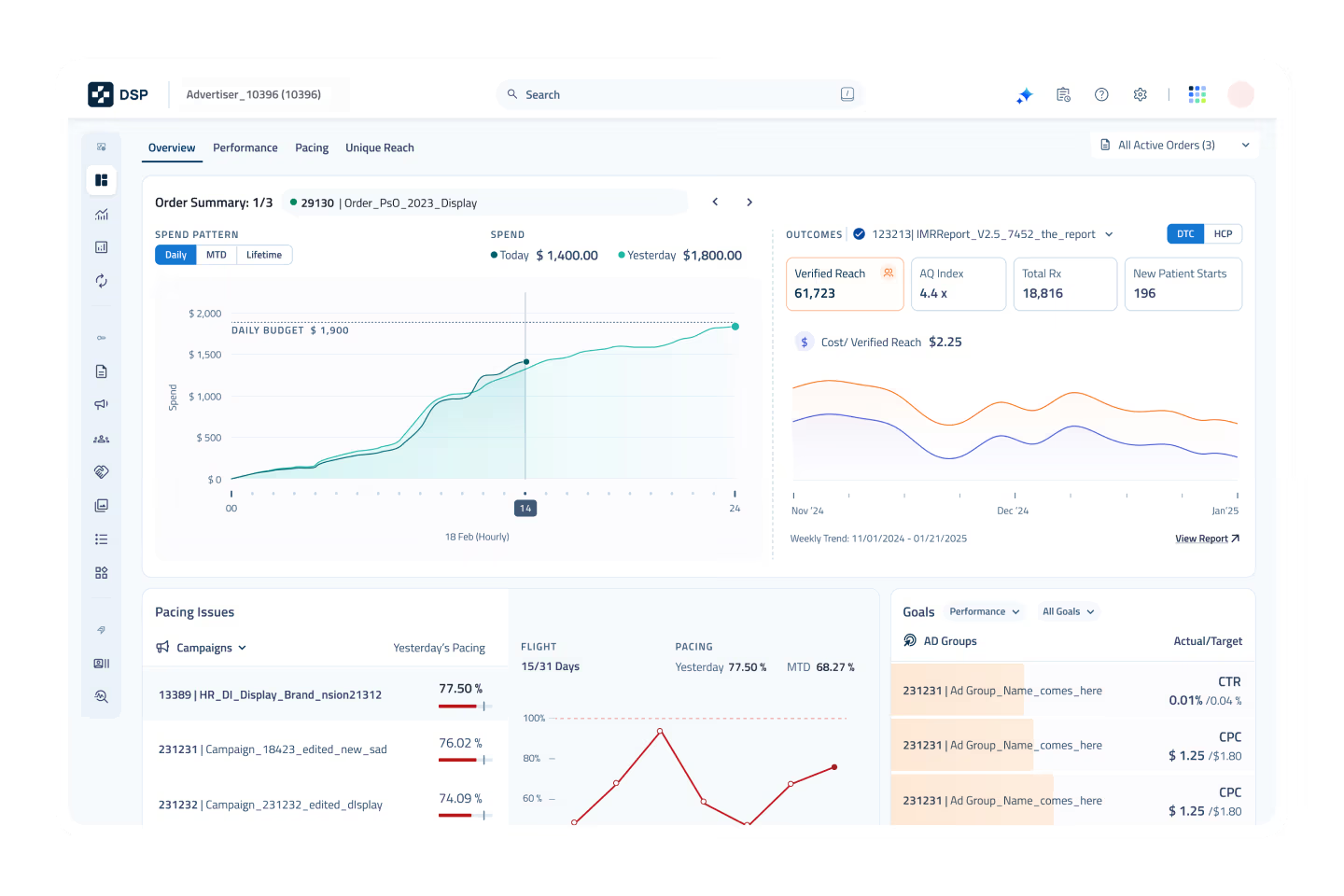
This is the premise behind DeepIntent Cora™. Reading the market and turning what you find into an audience and a plan should be one continuous motion, performed by the person accountable for the result.
The brands that pull ahead over the next few years are likely to be using data from many of the same vendors that their competitors bought from. But they will be the ones who shortened the distance between noticing something in the data and acting on it.